
What Is My Commercial Property Worth, And How Do I Find Out?
Your commercial property’s value is not what you paid for it. It is what the market will pay for it today. Those two numbers can be very different, and knowing which one is real can mean the difference between a great decision and a costly mistake.
Whether you are thinking about refinancing, preparing to sell, handling estate planning, fighting a tax assessment, or working through a partnership buyout, you need an accurate number. And with commercial real estate, getting that number requires a different process than valuing a home.
This guide walks you through everything: the three professional valuation methods appraisers use, how to estimate value yourself, when you need a formal appraisal, and what factors actually move commercial property values up or down.
Why Commercial Property Valuation Differs from Residential
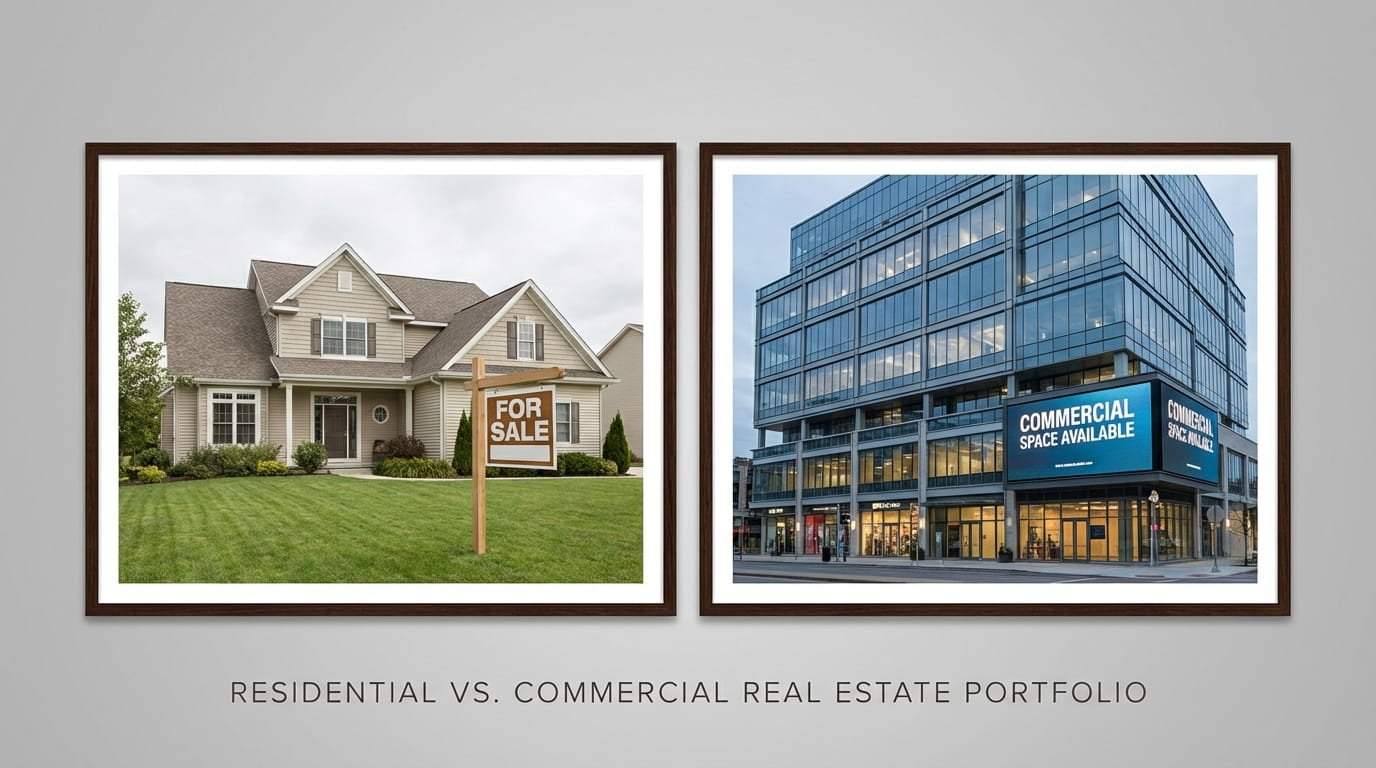
When someone buys a house, they mostly care about what similar houses nearby have sold for. The comparable sales approach dominates residential real estate. But commercial real estate works very differently, and the reason comes down to one word: income.
A commercial property is not just a building. It is a business that produces rent. Buyers care most about how much income the property generates today, how stable that income is, and how likely it is to grow. A building that earns strong, reliable rent from creditworthy tenants is worth significantly more than an identical building sitting half-empty.
This income focus is why the cap rate is so central to commercial valuation. The cap rate converts a property’s annual income into an estimated market value. If you want a complete breakdown of how cap rates work and what they mean for your investment, read our full guide on cap rate on commercial property.
Tenant quality also matters enormously. A 10-year lease with a national pharmacy chain produces far more predictable income than a month-to-month lease with a small local business. Lenders and buyers pay a premium for stability. Similarly, a long lease term remaining is more valuable than a lease that expires in 18 months.
Location and zoning play a role too, but in commercial real estate they mostly matter because they affect income potential. A property on a high-traffic corner in a growth market will attract better tenants and command higher rents than an identical building on a side street.
Three Professional Valuation Methods Explained

Professional appraisers use three recognized approaches to value commercial property. For most income-producing properties, the income capitalization approach carries the most weight. The others serve as supporting evidence or apply in specific situations.
Method 1: Income Capitalization Approach (The Primary Method)
This is the most widely used method for commercial real estate. The core idea is simple: a property is worth as much as the income it produces, discounted by the risk of that income.
Formula: Property Value = Net Operating Income (NOI) divided by Cap Rate
To use this formula, you need two things: your property’s NOI and the market cap rate for your property type and location.
Step 1: Calculate Net Operating Income (NOI)
NOI is your property’s annual income after operating expenses, but before any mortgage payment. Here is how to build it:
| Line Item | Amount |
|---|---|
| Gross Rental Income (all units, 100% occupied) | $180,000 |
| Minus Vacancy Allowance (7%) | -$12,600 |
| Plus Other Income (parking, storage, laundry) | +$4,800 |
| = Effective Gross Income | $172,200 |
| Minus Property Taxes | -$18,000 |
| Minus Insurance | -$6,500 |
| Minus Utilities (owner-paid) | -$9,200 |
| Minus Maintenance and Repairs | -$8,000 |
| Minus Property Management (9%) | -$15,500 |
| Minus CapEx Reserves (6%) | -$10,800 |
| = Net Operating Income (NOI) | $104,200 |
Step 2: Find the Market Cap Rate
The cap rate is not something you set, it is what buyers in your market are currently paying for properties like yours. Cap rates vary by property type, location quality, and market conditions. As a general guide for 2024 to 2026:
| Property Type | Typical Cap Rate Range | Notes |
|---|---|---|
| Multifamily (5+ units) | 4 to 7% | Lower in primary markets |
| Retail | 6 to 8% | Varies by tenant strength |
| Office | 6 to 9% | Higher due to WFH headwinds |
| Industrial / Warehouse | 5 to 8% | Strong demand, compressed rates |
Step 3: Apply the Formula
Using the example above: $104,200 NOI divided by a 6.5% cap rate equals $1,603,077 estimated value. If market cap rates for that property type were 7.5% instead, the same NOI would produce a value of $1,389,333. That is a $214,000 difference, from the same property, the same income, just a different cap rate assumption.
This is why cap rates matter so much. Small changes in the cap rate produce enormous changes in estimated value.
Method 2: Sales Comparison Approach
This method estimates value by looking at what similar properties have sold for recently. It works best when there are enough comparable sales in the same market to provide a reliable baseline.
The challenge with commercial real estate is that truly comparable sales are often hard to find. Two office buildings on the same street can have very different values based on their tenants, lease terms, and condition. Appraisers apply adjustments for differences in size, age, location, condition, and occupancy.
The most common metric used in this approach is price per square foot. If three similar retail buildings in your area sold for $180 to $210 per square foot and your building is 8,000 square feet, the implied value range is $1.44 million to $1.68 million. For multifamily properties, appraisers also use price per unit as a benchmark.
The sales comparison approach works best for smaller commercial properties, owner-user buildings, and properties in markets with frequent sales activity. It is less reliable for unique properties, special-use buildings, or markets where comparable transactions are rare.
Method 3: Cost Approach
The cost approach estimates how much it would cost to build a replacement property from scratch today, then subtracts depreciation for the age and condition of the existing building, and adds the value of the land.
Formula: Value = Replacement Cost minus Depreciation plus Land Value
This method is most useful for newer buildings, special-use properties like churches, schools, or hospitals that rarely sell, and properties where income data is unreliable. It is rarely the primary valuation method for standard income-producing commercial real estate because it does not reflect what the market will actually pay based on income.
If a 5-year-old warehouse cost $2.8 million to build, has depreciated 8% in value, and sits on land worth $400,000, the cost approach estimate is approximately $2,976,000.
DIY Valuation: How to Estimate Value Yourself
You do not need to hire a professional to get a rough idea of what your property is worth. With the right data, you can produce an estimate that is accurate to within 10% to 15%, which is useful for internal planning, evaluating a potential sale, or deciding whether a formal appraisal is worth pursuing.
Step 1: Calculate Your NOI
Pull together your actual rent roll, current lease agreements, last year’s operating expense statements, and your property tax bill. Build out your NOI using the formula shown above. Be honest about vacancy, use actual vacancy or a realistic market vacancy rate, not zero.
Be sure to include a capital expenditure reserve of 5% to 10% of gross income. Many property owners skip this line, which inflates their NOI and leads to an overestimated value. If you are also trying to understand what selling as-is versus at full market value would cost you, this guide on how much you lose selling a house as-is is a useful reference.
Step 2: Research Market Cap Rates
Find current cap rate data for your property type and market. Several sources can help:
- LoopNet and CoStar show recent commercial sales with cap rates listed on many transactions
- Commercial brokers active in your market track cap rates closely and will often share data in a casual conversation
- CBRE, JLL, Cushman and Wakefield, and Marcus and Millichap publish quarterly market reports with cap rate ranges by property type and market
- Your local commercial real estate association may publish transaction data
Step 3: Apply the Formula and Sanity Check
Divide your NOI by the cap rate you found for your property type and location. Run the calculation at both the low end and high end of the cap rate range to get a value range rather than a single number.
Then cross-check using price per square foot or price per unit by looking at recent comparable sales on LoopNet. If your income approach estimate and your sales comparison estimate are reasonably close, you have a solid ballpark figure. If they are far apart, investigate why.
DIY accuracy expectation: plus or minus 10 to 15%. Good for planning, not acceptable for lender or legal requirements.
Professional Appraisal: When and Why You Need One
For many situations, a rough estimate is not good enough. There are times when you legally or practically need a formal appraisal from a licensed, certified commercial appraiser.
When a Formal Appraisal Is Required
- Refinancing: Almost every commercial lender requires a certified appraisal before approving a loan
- Estate planning and probate: The IRS requires defensible valuations for estate tax purposes
- Partnership disputes and buyouts: Courts and mediators require objective third-party valuations
- Eminent domain proceedings: If a government agency is taking your property, you need an independent appraisal to negotiate fair compensation
- Tax assessment appeals: A certified appraisal is the strongest evidence you can present to challenge an assessment
- Insurance: Some commercial policies require periodic appraisals to set replacement value coverage
If you are dealing with an inherited commercial property and need to understand its value for estate purposes, you can also read about selling an inherited property and what your options look like from a buyer’s perspective.
Cost and Timeline
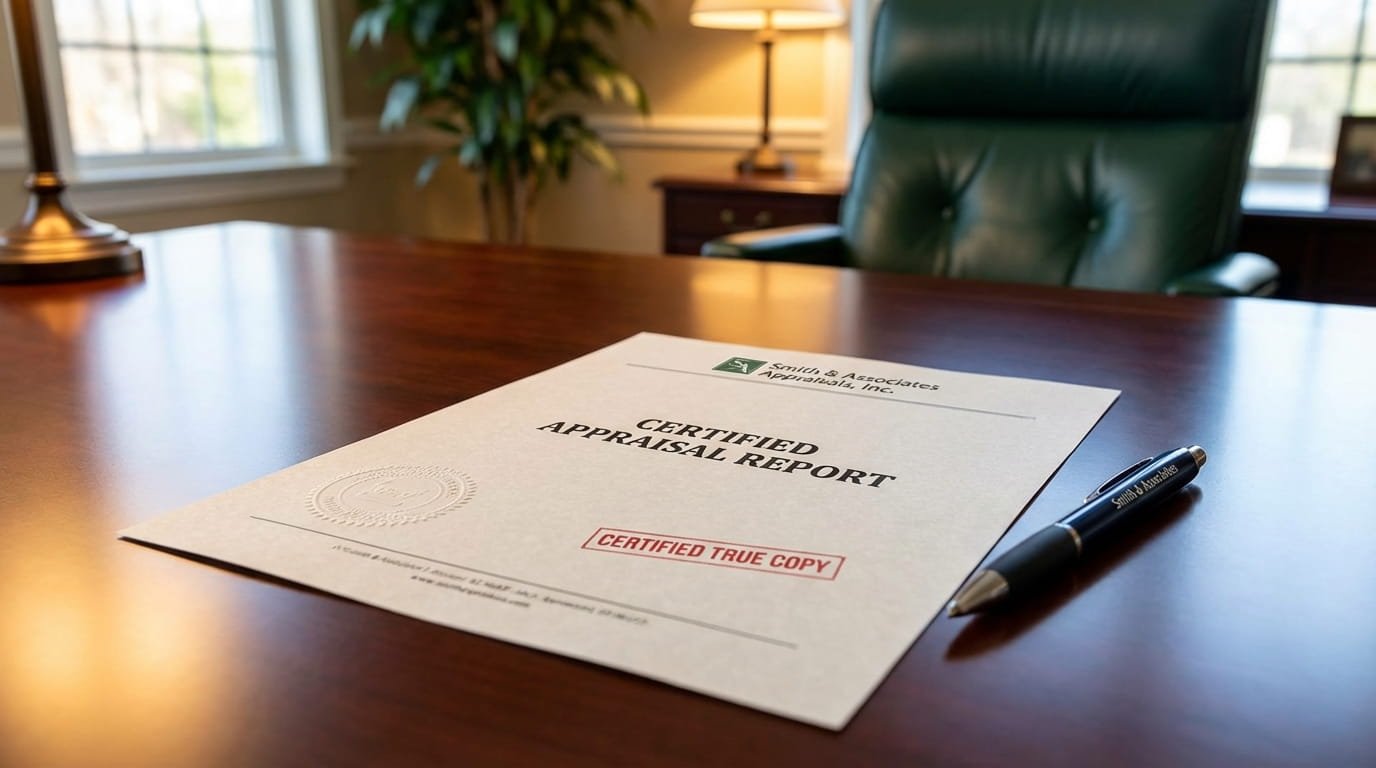
Commercial appraisals cost more than residential ones because they require more specialized analysis. Expect to pay $2,000 to $5,000 for a straightforward small commercial property. Complex properties, large multifamily buildings, or mixed-use assets can run $5,000 to $10,000 or more. The timeline from order to delivery is typically 2 to 4 weeks.
Choosing the Right Appraiser
Look for an appraiser with the MAI designation from the Appraisal Institute. MAI stands for Member, Appraisal Institute and is the gold standard credential for commercial property appraisal. Beyond credentials, choose someone with direct experience in your specific property type and local market. An office appraiser from another city is less useful than a local expert who knows your submarket.
Broker Opinion of Value (BOV): The Free Alternative
A Broker Opinion of Value, or BOV, is an informal valuation prepared by a commercial real estate broker, usually at no charge. Brokers provide them in hopes of earning the listing if you decide to sell. They are faster and cheaper than a formal appraisal, most brokers can deliver a BOV within 3 to 7 days.
A good BOV uses the same income capitalization and sales comparison methods a professional appraiser would apply. The difference is that it carries no legal weight. You cannot use a BOV to satisfy a lender or the IRS, and it is not defensible in court.
BOVs are most useful for making an initial go or no-go decision on a sale, getting a quick read on market conditions, or comparing opinions across multiple brokers before committing to anything. To get the most out of a BOV process, get two or three opinions from different brokers. If they cluster tightly, you have a reliable range. If they vary widely, ask each broker to walk you through their methodology.
Be aware of the built-in bias. A broker who wants your listing has a natural incentive to give you a number you will be happy with. Aggressive BOV estimates that significantly exceed what the market will actually pay are common. Use them as a starting point, not a final answer. For a practical comparison of what working with agents versus selling directly actually looks like, see this Long Island agent vs. cash buyer guide.
Key Value Drivers: What Actually Moves the Number

Location Factors
In commercial real estate, location is about more than prestige, it is about economics. High traffic counts and strong visibility attract better retail tenants who pay higher rents. Demographics and income levels in the surrounding area determine what types of businesses can survive there. Proximity to highways, transit, and complementary businesses affects both tenant demand and lease rates.
Properties in primary markets like major metro areas command lower cap rates because investors accept lower yields in exchange for stability, liquidity, and long-term demand. The same property in a small tertiary market will typically carry a higher cap rate, meaning it sells at a lower price relative to its income. This principle applies just as much to residential investment properties across markets like Nassau County, Suffolk County, Brooklyn, and Queens.
Property-Specific Factors
Occupancy rate is one of the single largest drivers of value. Every 10 percentage points of occupancy can move value dramatically. A property at 95% occupancy looks very different to a buyer than the same property at 75% occupancy, even if the physical building is identical.
Tenant credit quality matters just as much. A building fully leased to investment-grade national tenants on long-term leases is worth significantly more than the same building leased to a mix of local businesses on short-term deals. Credit-worthy tenants with long remaining lease terms are the most valuable income stream in commercial real estate.
Lease structure also plays a role. Triple net leases, where the tenant pays taxes, insurance, and maintenance on top of base rent, are considered more valuable than gross leases where the landlord covers those expenses, because they shift operating risk to the tenant and produce cleaner, more predictable net income.
Deferred maintenance reduces value in two ways: directly, by requiring capital investment to correct, and indirectly, by making the property less attractive to tenants and buyers. An appraiser and a smart buyer will both reduce their offers to reflect the cost of bringing a property up to standard. If you are dealing with a property that has significant damage or deferred maintenance, you can read about selling a damaged house and how buyers price that discount.
Market Conditions
The broader interest rate environment has a direct impact on cap rates and therefore on property values. When interest rates rise, investors require higher cap rates to justify commercial real estate over other investments, and values fall. When rates drop, cap rate compression pushes values up.
Supply and demand in your local submarket matters too. If your city is adding significant new competing inventory, that puts downward pressure on your rents and values. If supply is tight and demand is growing, the opposite is true.
Property type trends also matter. Industrial real estate has been in strong demand since 2020 due to e-commerce growth. Office has faced serious headwinds since remote work became mainstream. Multifamily has been resilient in most markets. Retail varies dramatically by format and location.
How Different Property Types Are Valued
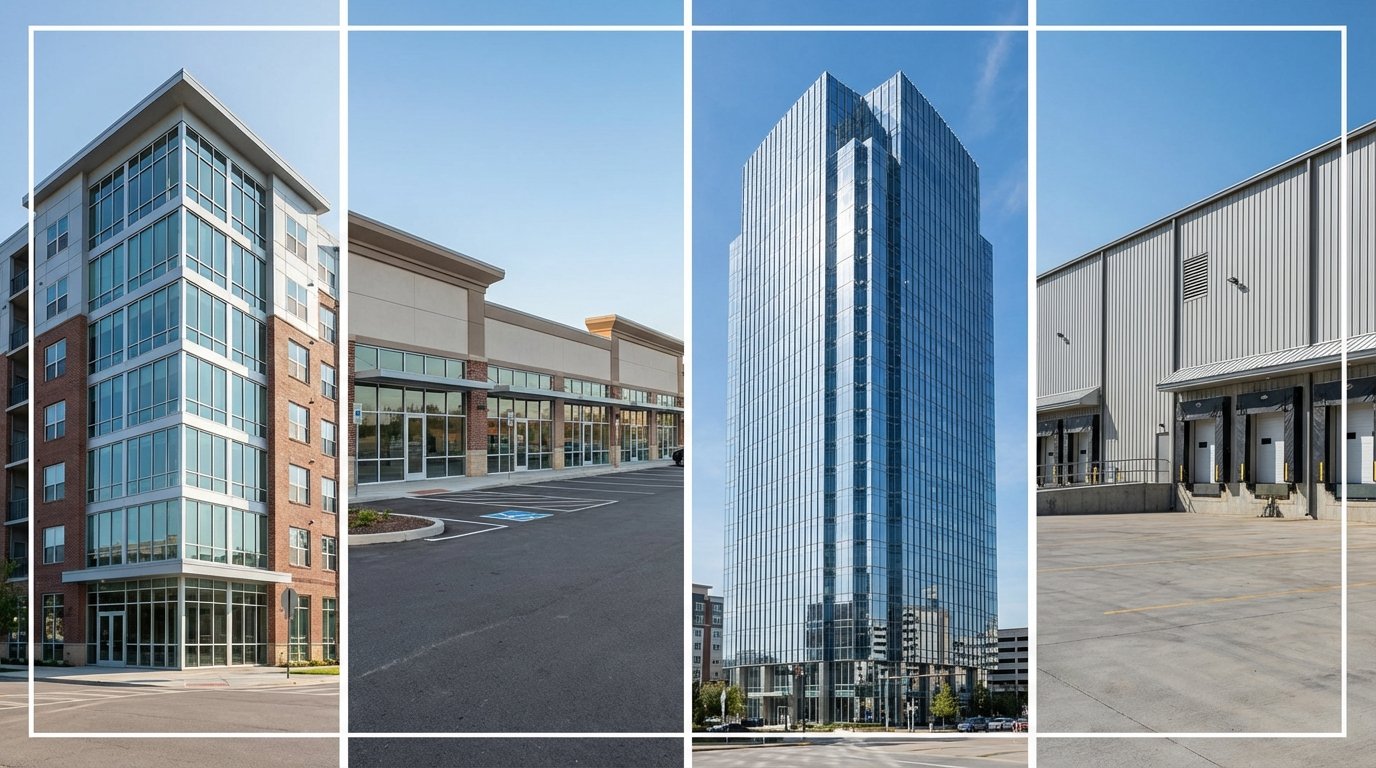
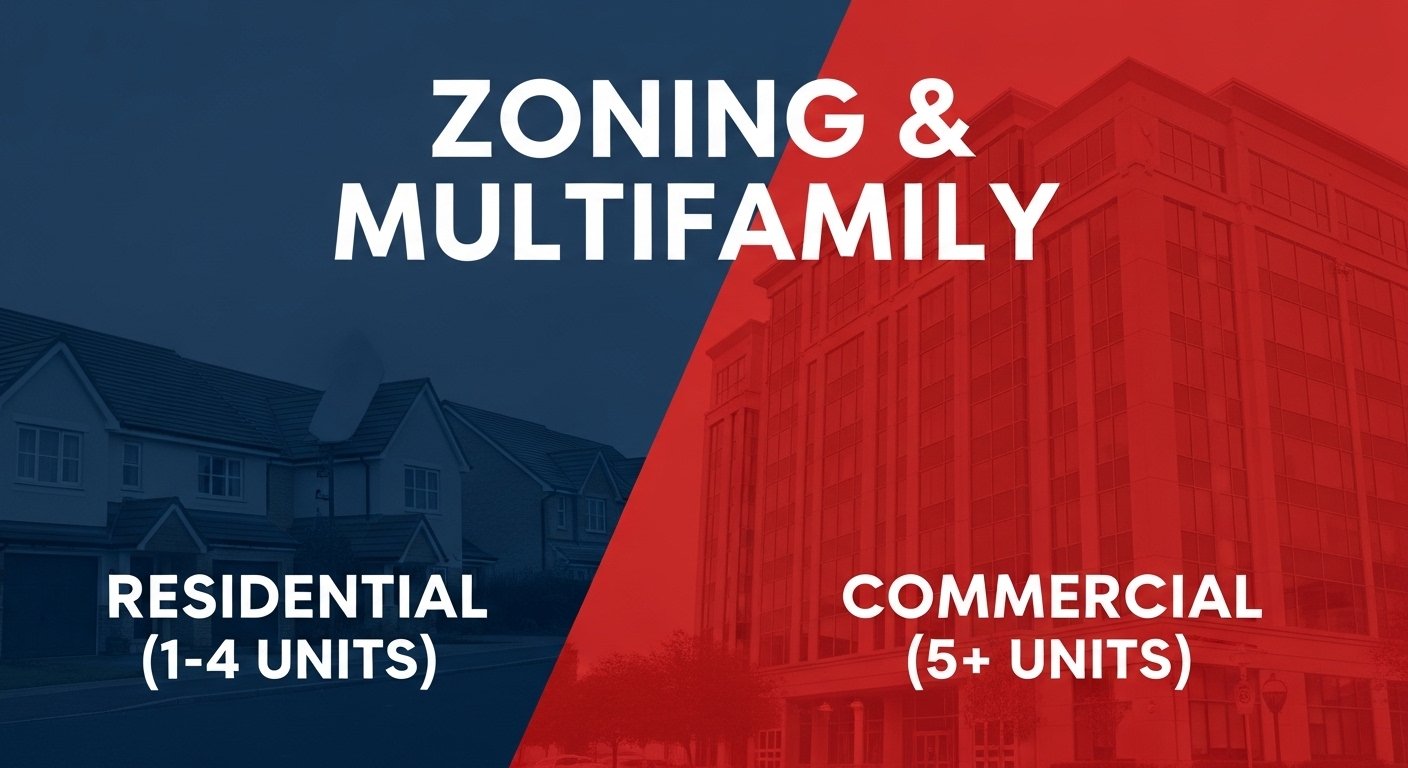
Multifamily (5 or More Units)
Multifamily properties are valued primarily on cap rate and price per unit. Cap rates for stabilized multifamily in primary markets typically run 4% to 5.5% for Class A properties, 5.5% to 7% for Class B, and 7% to 9% for Class C value-add deals. The rent roll is the most critical document in the analysis, appraisers review every lease to confirm actual rents, vacancy, and expiration dates.
Price per unit is a useful sanity check. If comparable apartment buildings in your area have sold for $120,000 to $150,000 per unit and you have a 20-unit building, the implied value range is $2.4 million to $3 million. Always cross-reference with the income approach.
Investors looking at multifamily markets on Long Island can explore active areas like Huntington, Brentwood, Islip, Amityville, and Bay Shore to get a feel for local pricing and demand.
Retail
Retail valuation is heavily influenced by tenant strength. A single-tenant property leased to a national drugstore on a 15-year triple net lease is considered very low risk and trades at compressed cap rates of 5% to 6.5%. A multi-tenant strip mall with local tenants, shorter leases, and higher turnover carries more risk and trades at 7% to 9%.
Appraisers and buyers also look at tenant sales per square foot when that data is available. A tenant doing $500 per square foot in sales is far more likely to renew their lease than one doing $150 per square foot. Strong tenant performance is a signal of lease stability and income durability.
Office
Office valuation depends heavily on class, location, and lease quality. Class A downtown buildings have maintained value better than suburban Class B and C properties because the best tenants continue to want premium, well-located space. Remote and hybrid work has hit suburban office hard, with cap rates expanding to 8% to 11% in many markets as vacancy has risen sharply since 2022.
Lease term remaining is especially critical in office. A building with five years of remaining lease term is a very different investment than one with 18 months, even at identical current rents.
Industrial and Warehouse
Industrial has been the strongest performing commercial asset class since 2020. E-commerce growth, supply chain reshoring, and last-mile delivery demand have driven vacancy to historic lows in many markets and pushed rents sharply higher. Cap rates for institutional-quality logistics facilities have compressed to 4.5% to 6%. Smaller industrial and flex properties typically trade at 6% to 8%.
Functional features drive premium pricing in industrial: clear height, loading dock count, truck court depth, power capacity, and proximity to major highways and ports.
Increasing Your Property Value Before Appraisal

You have more control over your property’s appraised value than most people realize. Since commercial value is driven by income, anything that increases NOI or reduces perceived risk will increase your appraisal. Here are the most effective steps you can take before ordering an appraisal.
Raise Rents to Market Rate
Below-market rents are one of the most common reasons commercial properties appraise for less than owners expect. If your tenants are paying $15 per square foot when the market supports $19, you are leaving real value on the table. Bring rents to market on renewals or vacant units before the appraisal, or at minimum show the appraiser documented market rent comparables to support a pro forma analysis.
Fill Vacancies
Every vacant unit reduces your NOI and increases the perceived risk of your property. Even short-term leases or month-to-month arrangements are better than empty space in the eyes of an appraiser. Fill vacancies at market rents before scheduling the appraisal. For a related look at how vacancy affects residential property pricing, see does an empty house sell faster.
Renew Expiring Leases
Leases expiring within the next 12 months are a risk flag for appraisers. Secure renewals or new long-term leases before the appraisal to demonstrate income stability. Longer lease terms and creditworthy tenants will directly increase your appraised value.
Reduce Operating Expenses
Audit your operating expenses carefully. Common inefficiencies include utility waste, over-paying on insurance, and property management fees above market rate. Every dollar you reduce in operating expenses adds a dollar to NOI, which the cap rate formula multiplies directly into your property value.
Document Everything
Appraisers can only credit you for what you can prove. Organize all lease agreements, rent rolls, operating statements for the last two to three years, recent capital improvement invoices, and any executed lease renewals or new leases. The more documentation you provide, the more defensible and accurate your appraisal will be.
Frequently Asked Questions
How much does a commercial property appraisal cost?
Most commercial appraisals run from $2,000 to $5,000 for straightforward small properties. Larger, more complex, or mixed-use properties can cost $5,000 to $10,000 or more. Cost depends on property size, complexity, intended use of the appraisal, and the appraiser’s market.
How long does a commercial appraisal take?
From the time you place the order to receiving the final report, expect 2 to 4 weeks. Complex properties or busy appraisal markets can push that to 4 to 6 weeks. Rush orders are sometimes available for an additional fee.
What is the difference between an appraisal and an assessment?
An appraisal is conducted by a private, certified appraiser to determine market value for a specific purpose like a loan or sale. An assessment is a government determination of taxable value for property tax purposes. Assessed value and market value often differ, in many jurisdictions, assessed value is intentionally set below market value or updated infrequently.
Can I appraise my own commercial property?
You can estimate your own value using the income capitalization method, and that estimate can be useful for internal planning. But for any purpose that requires a defensible, credentialed opinion, including lender requirements, estate taxes, litigation, or insurance, you need a licensed MAI appraiser. Self-appraisals carry no legal weight.
How often should I get my property appraised?
There is no required schedule outside of specific triggering events. Most owners get an appraisal when refinancing, selling, dealing with estate or tax matters, or when significant market changes make them curious about current value. Staying in touch with a local broker for informal BOV updates annually is a cost-effective way to track value between formal appraisals.
What is NOI and how do I calculate it?
Net Operating Income is the total income a property produces after all operating expenses are subtracted, but before mortgage payments. To calculate it: start with gross potential rent, subtract vacancy loss to get effective gross income, add any other income, then subtract all operating expenses including taxes, insurance, utilities, maintenance, management fees, and capital reserves.
Where do I find cap rates for my property type?
The most reliable sources are commercial brokerage market reports from CBRE, JLL, Cushman and Wakefield, and Marcus and Millichap. Local commercial brokers active in your submarket also track cap rates closely. LoopNet and CoStar show cap rates on many recent sale transactions. Your local commercial real estate association may publish periodic market data.
Why is my appraisal lower than expected?
The most common reasons are below-market rents, vacancies, short remaining lease terms, deferred maintenance, and rising cap rates in your market. Sometimes appraisers are simply working from incomplete data about comparable transactions. If you believe the appraisal is wrong, you have the right to challenge it by providing additional comparable sales data, updated rent comparables, or documentation of capital improvements.
How does occupancy rate affect property value?
Directly and significantly. Occupancy drives NOI, every vacant unit is lost income. Beyond the income impact, low occupancy signals risk to buyers and appraisers, which can push the cap rate higher, compounding the value reduction. Moving from 80% to 95% occupancy can increase property value by 20% to 30% or more depending on the cap rate environment.
What is GRM (Gross Rent Multiplier)?
The Gross Rent Multiplier is a quick, rough valuation shortcut. It divides the property’s sale price by its annual gross rental income. If a building sold for $1.5 million and collects $150,000 in gross rent, the GRM is 10. You can apply a market GRM to your own gross rent for a fast estimate. GRM is less precise than the income capitalization approach because it ignores operating expenses and vacancy.
How do lease terms affect property value?
Longer leases with creditworthy tenants increase value by reducing income risk. A 10-year lease signed today provides a decade of predictable, contractually guaranteed income, which makes the property far safer and therefore more valuable. Short-term or expiring leases create uncertainty that buyers and lenders price in through higher cap rates or lower offers.
How does zoning affect commercial property value?
Zoning controls what a property can be used for, which directly affects its income potential and buyer pool. More permissive zoning that allows a wider range of uses tends to support higher values because it attracts more types of tenants and more categories of buyers. Restrictive zoning that limits use can cap value. Mixed-use zoning can be a premium, especially in high-demand urban markets.
What is DSCR and how does it relate to value?
Debt Service Coverage Ratio measures whether a property’s NOI is sufficient to cover its mortgage payment. Lenders typically require a DSCR of 1.20 to 1.35, meaning NOI must exceed the annual debt payment by 20% to 35%. DSCR connects directly to value because it determines the maximum loan a lender will make, which in turn constrains the maximum price most buyers can pay.
How to calculate cap rate on my property?
Divide your annual NOI by the property’s current market value or purchase price, then multiply by 100 to get a percentage. For example, $90,000 NOI divided by $1,200,000 value equals a 7.5% cap rate. To estimate market value, flip the formula: divide your NOI by the market cap rate for your property type and location.
Conclusion
Knowing what your commercial property is worth is not optional, it is the foundation of every smart decision you make as an owner. Whether you are refinancing, planning a sale, managing an estate, or simply tracking your investment, an accurate valuation gives you real leverage.
The income capitalization approach is your primary tool. Build your NOI honestly, research market cap rates for your property type and location, and apply the formula. Cross-check with sales comparables. Get a BOV from a trusted broker. When the stakes are high, invest in a certified MAI appraisal.
And before any formal appraisal, do the work to maximize your NOI: fill vacancies, raise below-market rents, renew expiring leases, and document everything. The effort you put in before the appraisal directly translates into the number you get back.
Ready to take the next step? Run your NOI calculation today using the framework in this guide. And if you are at the point where selling makes more sense than holding, explore your options at We Buy Property NY. Whether you need to sell your house fast, are dealing with a property in foreclosure, or want to understand how our process works, we are here to help. You can also contact us directly to get a no-obligation offer.