
How Seller Closing Costs Reduce Your Capital Gains Tax Bill
Here is some good news that most home sellers never hear: your closing costs do reduce your tax bill. Not directly, and not the way your mortgage interest deduction works, but when you do the math, those selling expenses can save you thousands of dollars in capital gains taxes.
Most sellers know they owe capital gains tax when they sell a property for a profit. What most sellers do not know is that almost every dollar you spend to sell that property, your real estate commission, attorney fees, title insurance, transfer taxes, and more, reduces the taxable profit the IRS calculates. On a typical home sale, that can add up to $4,000 to $10,000 or more in tax savings.
This guide explains exactly how it works, which closing costs count, which ones do not, and how to make sure you are not leaving money on the table when you file. This article is for educational purposes only. Tax rules change and your situation is unique, so always review your numbers with a licensed CPA before filing.
The Short Answer: Not a Direct Deduction, But Still a Real Benefit
Here is what seller closing costs are and are not on your tax return:
The indirect benefit is real: Closing costs increase your cost basis, which reduces your capital gain, which reduces your tax.
The direct deduction does not apply: You cannot list seller closing costs on Schedule A the way you deduct mortgage interest or charitable donations.
Here is the key concept: when you sell a property, you pay capital gains tax on your profit. Your profit is your sale price minus your cost basis. Your cost basis started at whatever you originally paid for the property. But it goes up every time you add qualifying costs, including your selling expenses. A higher basis means a smaller profit. A smaller profit means a smaller tax bill.
Real example: You have $32,000 in closing costs on a home sale. You are in the 15% capital gains bracket. Adding those costs to your basis reduces your taxable gain by $32,000, which saves you $4,800 in taxes. That is a real dollar benefit from keeping good records and knowing the rules.
This benefit matters most to sellers with large profits, investors selling rental properties, and people selling second homes or vacation properties. If your profit falls entirely within the primary residence exclusion ($250,000 for single filers, $500,000 for married couples), your closing costs may have no effect on your federal tax bill at all. If you are still deciding whether to sell and want to understand all the costs involved first, read our guide on how much you lose selling a house as-is.
Understanding Cost Basis and Capital Gains
What Is Cost Basis?
Your cost basis is the IRS’s way of tracking what you have invested in a property. It starts with your original purchase price and grows from there. Every qualifying improvement you make, a new roof, a kitchen remodel, an addition, adds to your basis. And when you sell, every qualifying selling expense adds to it as well.
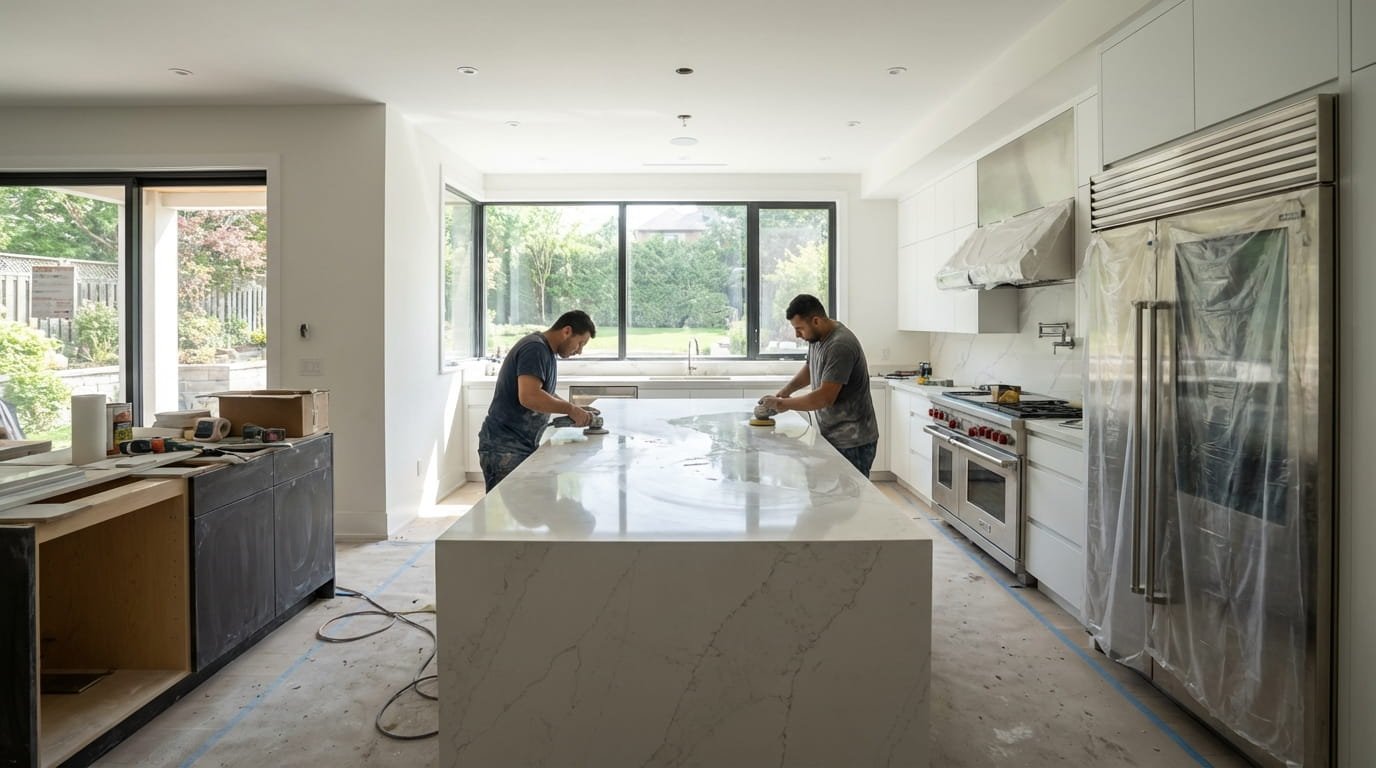
Adjusted Cost Basis = Original Purchase Price + Capital Improvements + Selling Costs
What Is a Capital Gain?
A capital gain is the profit you make when you sell. The IRS calculates it as your sale price minus your adjusted cost basis. The bigger your basis, the smaller your gain. The smaller your gain, the less tax you owe.
Capital Gain = Sale Price minus Adjusted Cost Basis
Side-by-Side Example: The Dollar Difference
| Without Closing Costs | With Closing Costs Added | |
|---|---|---|
| Sale Price | $400,000 | $400,000 |
| Original Cost Basis | $280,000 | $280,000 |
| Closing Costs Added to Basis | $0 | $32,000 |
| Adjusted Basis | $280,000 | $312,000 |
| Taxable Capital Gain | $120,000 | $88,000 |
| Tax Owed (15% rate) | $18,000 | $13,200 |
| Tax Savings | — | $4,800 |
Capital Gains Tax Rates for 2026
Long-term capital gains (property owned more than one year) are taxed at these federal rates:
| Tax Rate | Single Filer Income | Married Filing Jointly |
|---|---|---|
| 0% | Up to $44,625 | Up to $89,250 |
| 15% | $44,626 to $492,300 | $89,251 to $553,850 |
| 20% | Over $492,300 | Over $553,850 |
| +3.8% NIIT | High earners only | Net Investment Income Tax may apply |
The Primary Residence Exclusion
If the property you are selling is your primary home, you may qualify to exclude a large portion of your gain from taxes entirely. Single filers can exclude up to $250,000 in profit. Married couples filing jointly can exclude up to $500,000. To qualify, you must have owned the home and lived in it as your primary residence for at least 2 of the last 5 years before the sale.
If your total gain falls below the exclusion limit, your closing costs will not reduce your federal tax bill, because you are already paying zero tax on that gain. But if your profit exceeds the exclusion, every dollar of closing costs you add to your basis directly reduces the taxable amount above the threshold.
Example: Single filer sells a home for $800,000. Basis is $300,000. Gain is $500,000. After the $250,000 exclusion, $250,000 is taxable. Adding $60,000 in closing costs to the basis reduces the taxable gain to $190,000. At 15%, that saves $9,000 in federal taxes.
Which Closing Costs Increase Your Cost Basis?
Costs That Add to Your Basis (and Reduce Your Tax)
| Closing Cost | Typical Amount | Tax Benefit |
|---|---|---|
| Real estate commission | 5 to 6% of sale price | Biggest single item; fully added to basis |
| Attorney fees | $500 to $5,000 | Fully added to basis |
| Title insurance | $1,000 to $3,000 | Added to basis |
| Transfer taxes and recording fees | Varies by location | Added to basis |
| Escrow / settlement fees | $300 to $700 | Added to basis |
| Advertising and marketing | Varies | Photography, listing fees added |
| Home staging | Varies | Added to basis as selling expense |
| Pre-listing inspection | $300 to $500 | Added to basis |
| Home warranty for buyer | $300 to $600 | Added to basis |
| Repairs required to complete sale | Varies | Added if directly tied to sale |
Costs That Do NOT Add to Your Basis
Some costs that show up on your closing disclosure cannot be added to your cost basis, because they are already handled elsewhere on your tax return or are simply personal expenses:
- Mortgage interest: Already deducted each year on Schedule A. You cannot count it twice.
- Property taxes: Deducted annually on Schedule A. They are not added to basis.
- HOA dues: Regular operating expenses, not selling costs.
- Utilities and homeowner’s insurance: Personal living expenses, not deductible as selling costs.
- Moving costs: No longer deductible for most sellers since the 2018 tax law change. Active duty military members are the exception.
Double-dipping warning: If you deducted property taxes on Schedule A in the year of sale, you cannot also add the prorated property tax credit to your cost basis. Pick one or the other and document your choice.
Special Rules by Property Type
Primary Residence
For most primary residence sellers, the $250,000 or $500,000 exclusion covers the entire gain and closing costs become irrelevant for federal tax purposes. But for sellers in high-appreciation markets, sellers who have owned their home for many years, or single filers with large gains, the amount above the exclusion is fully taxable and every dollar of closing costs counts.
To use the exclusion: you must have owned the home for at least two years AND lived in it as your primary home for at least two of the five years immediately before the sale. Temporary rentals or absences may still qualify as long as the two-year residency test is met overall.
You can only use the $250,000 or $500,000 exclusion once every two years.
If you are thinking about selling your home in New York, whether in Nassau County, Suffolk County, Brooklyn, or Queens, understanding your tax position before you list is one of the smartest things you can do. You can also learn how to sell your house fast in New York once your tax planning is in order.
Investment and Rental Property
There is no capital gains exclusion for investment properties. Every dollar of profit is taxable. This makes closing costs especially valuable for rental property sellers, adding $40,000 to $60,000 in selling expenses to your basis can save $6,000 to $12,000 or more in federal taxes at the 15% to 20% rates.
Rental property sellers also face depreciation recapture. Every year you owned the rental, the IRS let you deduct depreciation on the building (not the land). When you sell, the IRS requires you to pay back those deductions as ordinary income taxed at a rate of up to 25%. This is separate from capital gains tax and closing costs do not reduce it.
A 1031 like-kind exchange is the most powerful tax strategy available to investment property sellers. By reinvesting your proceeds into a qualifying replacement property through a qualified intermediary, you can defer 100% of your capital gains tax and depreciation recapture. You must identify the replacement property within 45 days of closing and close on it within 180 days.
Second Homes and Vacation Property
Second homes are treated like investment properties for tax purposes. There is no capital gains exclusion unless you convert the property to your primary residence and live there for at least two years before selling. Closing costs are added to basis and reduce your taxable gain just as they would on any investment property.
Inherited Property
Inherited properties receive a step-up in basis to the fair market value at the date of the original owner’s death. This means if a parent bought a home for $100,000 decades ago and it was worth $600,000 when they passed, your basis is $600,000, not $100,000. In many cases, inherited properties have little to no taxable capital gain when sold, making closing costs less critical for tax purposes. But they should still be documented and added to your basis in case you hold the property for a period before selling.
If you have recently inherited a property and are weighing your options, read our guide on selling an inherited property to understand the full process, including how to handle the sale when multiple heirs are involved. You can also explore what selling an inherited house looks like when working with a cash buyer.
How to Document Closing Costs for Your Taxes
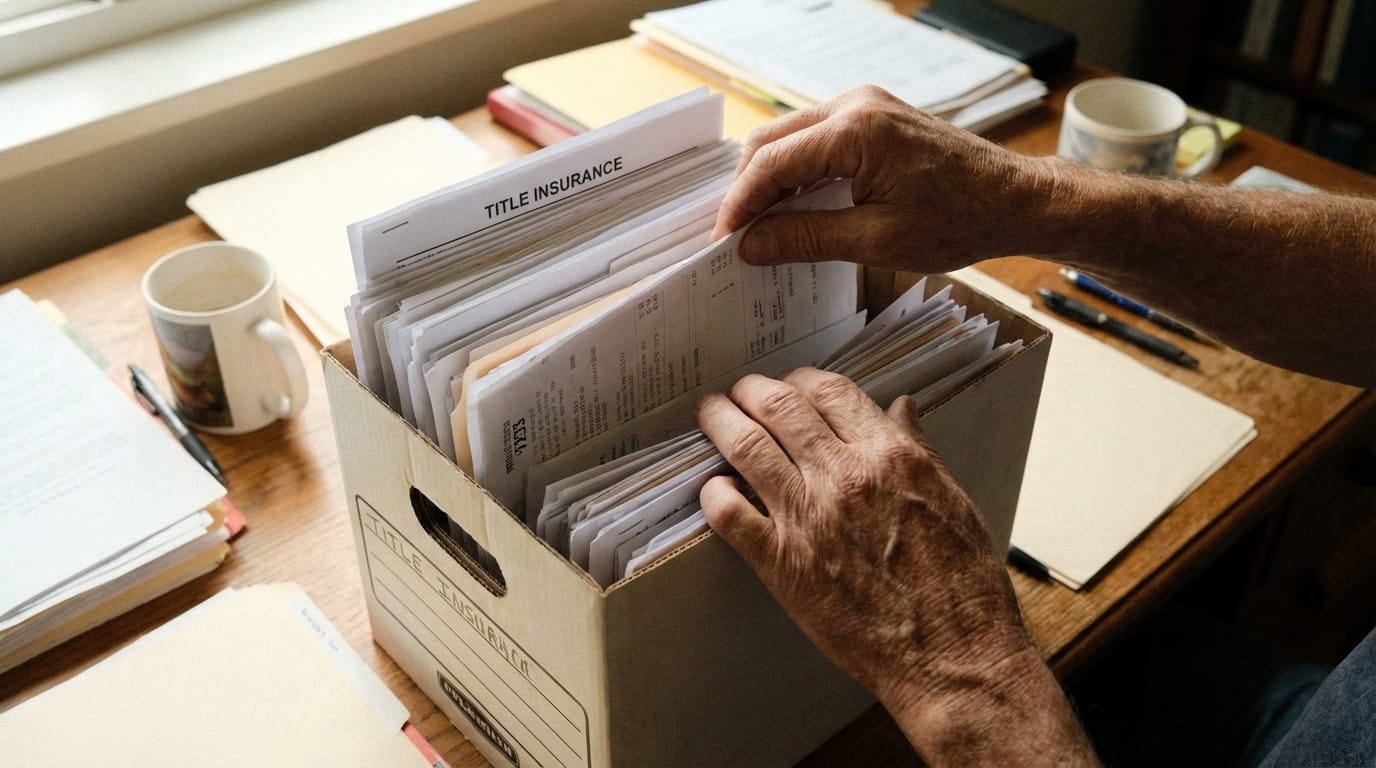
The IRS does not automatically know what you spent to sell your property. You are responsible for reporting your adjusted cost basis accurately on your tax return, and for keeping documentation that supports every number.
Documents You Must Keep (Forever)
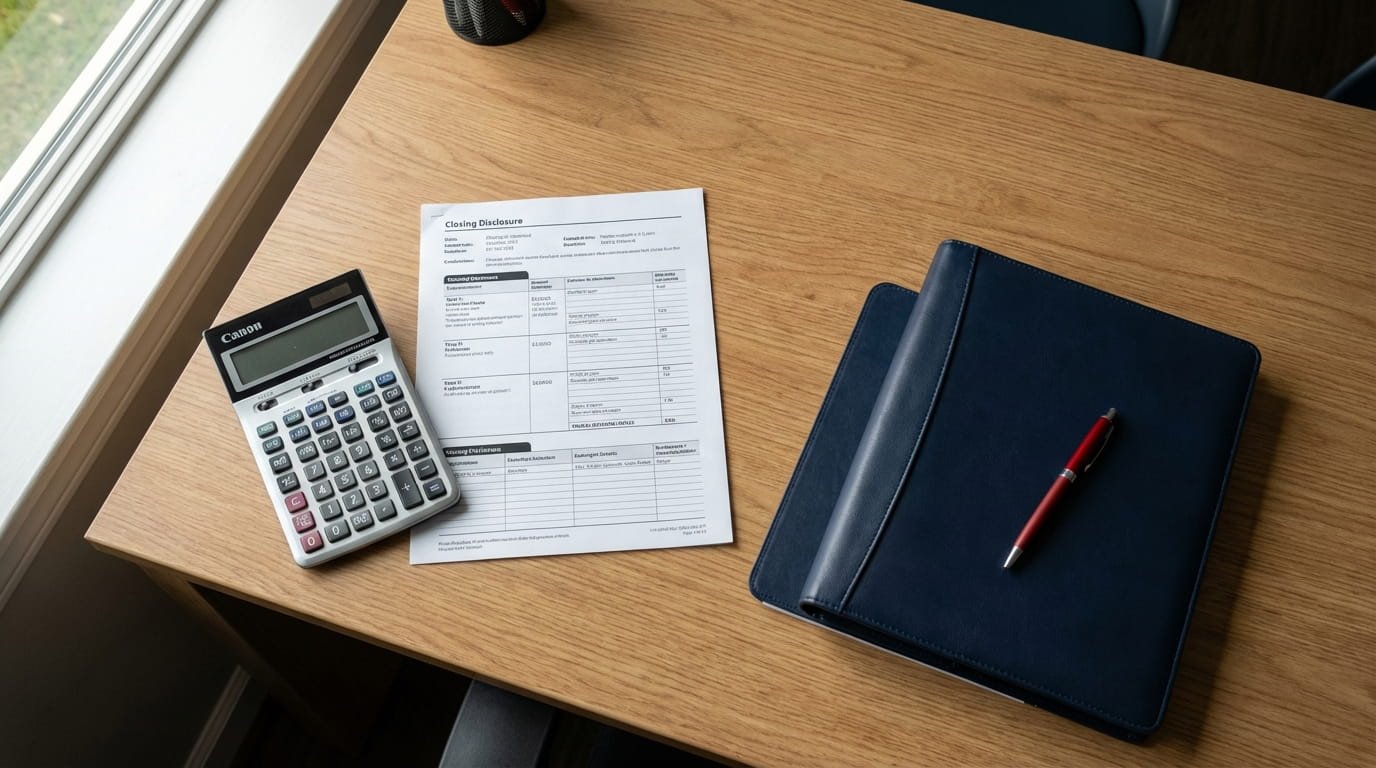
- Closing Disclosure or HUD-1 Settlement Statement from your current sale: This is the master record of all closing costs. Keep it permanently.
- Original purchase closing statement: This establishes your starting basis. If you cannot find it, contact your title company from the original purchase.
- Receipts for all selling expenses not on the closing disclosure: Staging, photography, pre-listing inspection, advertising.
- Home improvement records: Invoices and receipts for every capital improvement made during your ownership. These also add to your basis.
- Prior year tax returns that include depreciation schedules if this was a rental property.
How to Report It on Your Tax Return
Your home sale is reported on Schedule D (Capital Gains and Losses) of your federal return. You list the details on Form 8949 first, then the totals flow to Schedule D. On Form 8949 you report: the sale price, your adjusted cost basis (original purchase price plus improvements plus selling costs), and the resulting gain or loss.
Your broker or closing agent is required to send you a Form 1099-S reporting the gross proceeds of the sale. This goes to the IRS as well. Make sure the numbers match.
Keep all sale-related documents for at least 7 years after filing the tax return for that sale year.
Tax Strategies to Maximize Your Deductions
Track Every Selling Expense, Even Small Ones
Small costs add up fast. A $400 pre-listing inspection, a $1,200 staging fee, a $350 professional photography package, and $800 in repairs ordered by the buyer during due diligence total $2,750, which at a 15% tax rate saves you $412. On top of a $25,000 to $40,000 commission, tracking every dollar matters.
Time Capital Improvements Strategically
Any capital improvement made before the sale adds to your basis and reduces your taxable gain. A $15,000 kitchen remodel done a year before selling is worth $2,250 in tax savings at 15%. But improvements made after you list the property for sale may be treated as selling expenses rather than capital improvements. Either way, they should add to your basis. Keep the invoice and note the date.
Use the Primary Residence Exclusion While You Can
If you own a rental property and are considering selling, moving into it as your primary residence for at least two years before the sale qualifies you for the $250,000 or $500,000 exclusion. This strategy can save tens of thousands of dollars on a high-appreciation property. The rules require genuine residency, not just a change of address, the IRS scrutinizes these conversions closely.
Offset Gains with Capital Losses
If you have capital losses from the sale of stocks, mutual funds, or other investments, you can use them to offset capital gains from your real estate sale dollar for dollar. This is called tax-loss harvesting and is worth discussing with a CPA before you close if you have a significant unrealized loss in your investment portfolio.
Consider a 1031 Exchange for Investment Property
If you are selling an investment or rental property and plan to reinvest in another property, a 1031 exchange lets you defer all capital gains and depreciation recapture taxes indefinitely. You must engage a qualified intermediary before your sale closes. Once the money touches your hands, the exchange is disqualified.
Common Tax Mistakes That Cost Sellers Money
Not Adding Closing Costs to Your Basis
This is the most expensive mistake on this list. Sellers who simply report the original purchase price as their cost basis without adding selling expenses are overpaying their capital gains tax by thousands of dollars. The IRS will not remind you to add these costs. You have to know to do it.
Losing Your Closing Documents
If you cannot prove your cost basis with documentation, the IRS may assign you a zero basis, which means your entire sale price becomes a taxable gain. Keep your original purchase closing statement and your sale closing disclosure permanently. Scan them and store backups in the cloud.
Forgetting Home Improvement Costs
Every capital improvement you made during your ownership, roof replacements, HVAC systems, additions, remodels, new windows, decking, increases your cost basis. Sellers who have owned a property for 10 to 20 years and made significant improvements often have $50,000 to $100,000 in basis-increasing improvements they have never documented properly. Dig up those records.
Missing the Residency Requirement for the Exclusion
If you rented out your primary home for more than three years before selling, you may lose part or all of your $250,000 or $500,000 exclusion. The two-of-five-year rule means you need to have lived there as your primary home for at least 24 months of the 60 months before the sale. Do not assume you qualify without checking the actual dates.
Not Consulting a CPA When It Matters
For straightforward primary residence sales fully within the exclusion limit, your closing costs have no tax impact and a CPA consultation is probably not necessary. But if your gain exceeds the exclusion, if this is an investment property, if depreciation recapture applies, or if your sale price exceeds $1 million, a CPA consultation will almost certainly save you more than it costs. Fees of $300 to $500 for tax advice on a complex real estate sale are routine.
Frequently Asked Questions
Are closing costs tax deductible for the seller?
Not as a direct line-item deduction, but yes as an indirect tax benefit. Seller closing costs are added to your cost basis, which reduces your capital gain, which reduces the tax you owe on your profit. The savings can be substantial on high-gain sales.
Can I deduct my real estate commission on my taxes?
Yes, indirectly. Your commission is added to your cost basis as a selling expense. On a $400,000 sale with a 6% commission, that is $24,000 added to your basis, which at a 15% capital gains rate saves you $3,600 in taxes. If you are considering selling without an agent to avoid commission entirely, read about how to save 6% commission selling without a realtor.
Do closing costs reduce capital gains tax?
Yes. By increasing your adjusted cost basis, closing costs reduce the size of your capital gain. Smaller gain equals smaller tax. The exact savings depend on your tax bracket and how much your total gain exceeds your exclusion.
What seller expenses are tax deductible?
Commission, attorney fees, title insurance, transfer taxes, recording fees, escrow fees, marketing and advertising costs, staging, pre-listing inspections, and buyer-requested repairs tied directly to the sale. These are all added to your cost basis as selling expenses.
Can I deduct moving costs when selling my home?
No. Moving costs have not been deductible for most taxpayers since the Tax Cuts and Jobs Act of 2018. The only exception is active duty military members moving under official orders.
Can I deduct home staging costs?
Yes. Home staging costs are treated as selling expenses and added to your cost basis, which reduces your capital gain. Keep receipts from your staging company or any items purchased specifically to prepare the home for sale.
What is the capital gains exclusion for home sellers?
Single filers can exclude up to $250,000 in capital gain from the sale of their primary residence. Married couples filing jointly can exclude up to $500,000. You must have owned the home and lived in it as your primary residence for at least 2 of the last 5 years before the sale.
Do I pay capital gains tax if I sell my house?
Only if your profit exceeds the exclusion amount. If you are single and your gain is $200,000, you owe no federal capital gains tax. If your gain is $350,000, the first $250,000 is excluded and you pay tax only on the remaining $100,000. Closing costs reduce the taxable $100,000 further.
Can I deduct attorney fees for selling my home?
Yes. Attorney fees paid as part of your real estate closing are added to your cost basis as selling expenses. Keep the invoice from your real estate attorney and your closing disclosure showing the fee.
What documents do I need for taxes after selling?
Your Closing Disclosure or HUD-1 from the sale, your original purchase closing statement, receipts for all home improvements made during ownership, receipts for any selling expenses not listed on the closing disclosure, and Form 1099-S from your broker or closing agent.
What if I sell for a loss?
If you sell your primary residence at a loss, the IRS does not allow you to deduct that loss, personal residence losses are not deductible. However, if you sell an investment property at a loss, that loss is a deductible capital loss that can offset capital gains from other sales.
What is depreciation recapture?
If you have ever claimed depreciation deductions on a rental or investment property, the IRS requires you to pay back those deductions when you sell. This is called depreciation recapture and is taxed as ordinary income at a rate of up to 25 percent. It is calculated separately from your capital gains tax and is one of the most commonly underestimated costs of selling rental property.
How often can I use the $250,000 or $500,000 exclusion?
Once every two years. If you sold a primary residence last year and already used the exclusion, you must wait two years from that sale date before using it again on a new sale.
Do I pay state taxes on a home sale capital gain?
In most states, yes. State capital gains tax rates vary widely. Nine states have no state income tax and therefore no state capital gains tax: Alaska, Florida, Nevada, South Dakota, Tennessee, Texas, Washington, Wyoming, and New Hampshire. All other states tax capital gains at varying rates, often matching their ordinary income tax rate.
When should I hire a CPA for my home sale?
Hire a CPA if your capital gain will exceed the exclusion limit, if you are selling a rental or investment property, if depreciation recapture applies, if your sale price is over $1 million, or if you are considering a 1031 exchange. In these situations, professional tax advice almost always saves more money than it costs.
Conclusion
Seller closing costs do not give you a direct line-item deduction, but they provide a real and meaningful tax benefit by reducing your capital gains. Every dollar you add to your cost basis is a dollar the IRS does not tax as profit. On a typical sale with $30,000 to $60,000 in selling expenses, that can mean $4,500 to $12,000 in tax savings or more.
The most important things you can do are simple: save every document from your sale, add all qualifying selling expenses to your cost basis on Schedule D, and do not forget the home improvements you made over the years. Those records, combined with proper reporting on Form 8949, are what stand between you and an unnecessarily large tax bill.
If your sale involves a large gain above the exclusion limit, a rental property, or a complex situation, talk to a CPA before you file. The consultation fee is almost always one of the best investments you can make in the year you sell.
If you are still in the decision-making stage and weighing your options, we can help. Whether you are looking to sell your house fast, dealing with a divorce, handling a foreclosure situation, or simply want to understand how the process works, visit We Buy Property NY or contact us to get a no-obligation cash offer today.