The Complete Guide to Zoning, Property Classification, and Mixed-Use Real Estate
Confused about whether your 4-unit building is commercial or residential? You are not alone. This is one of the most common questions investors, buyers, and developers run into when they start buying income-producing properties.
And it matters more than you might think. The classification of a property affects what type of loan you can get, how much you have to put down, what building codes apply, how you are taxed, and what insurance you need. Getting this wrong early in the process can cost you tens of thousands of dollars.
This guide answers the most important questions: What is the real difference between commercial and residential property? When does a multifamily building become commercial? Can a property be zoned for both uses at the same time? Here are the clear, direct answers you need.
Commercial vs. Residential Property: The Key Differences
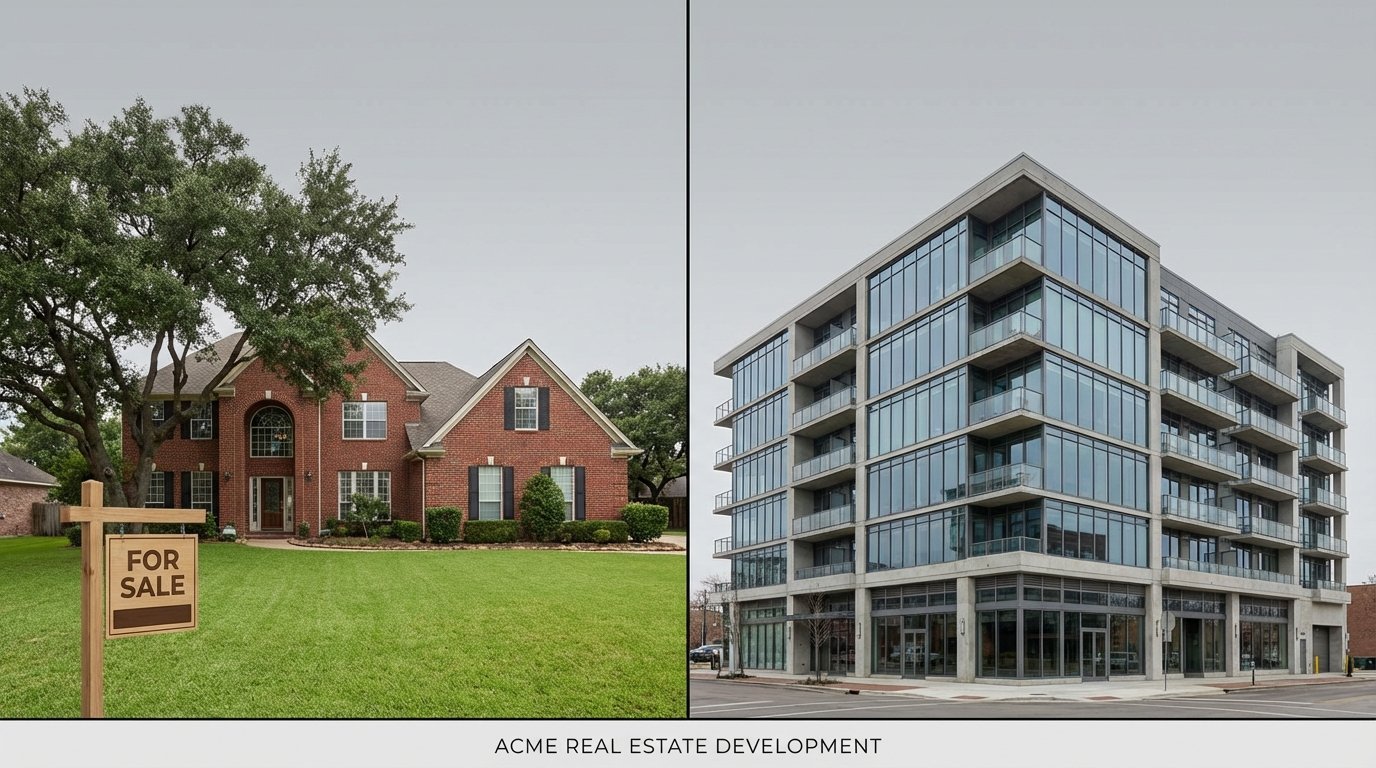
Legal and Zoning Definitions
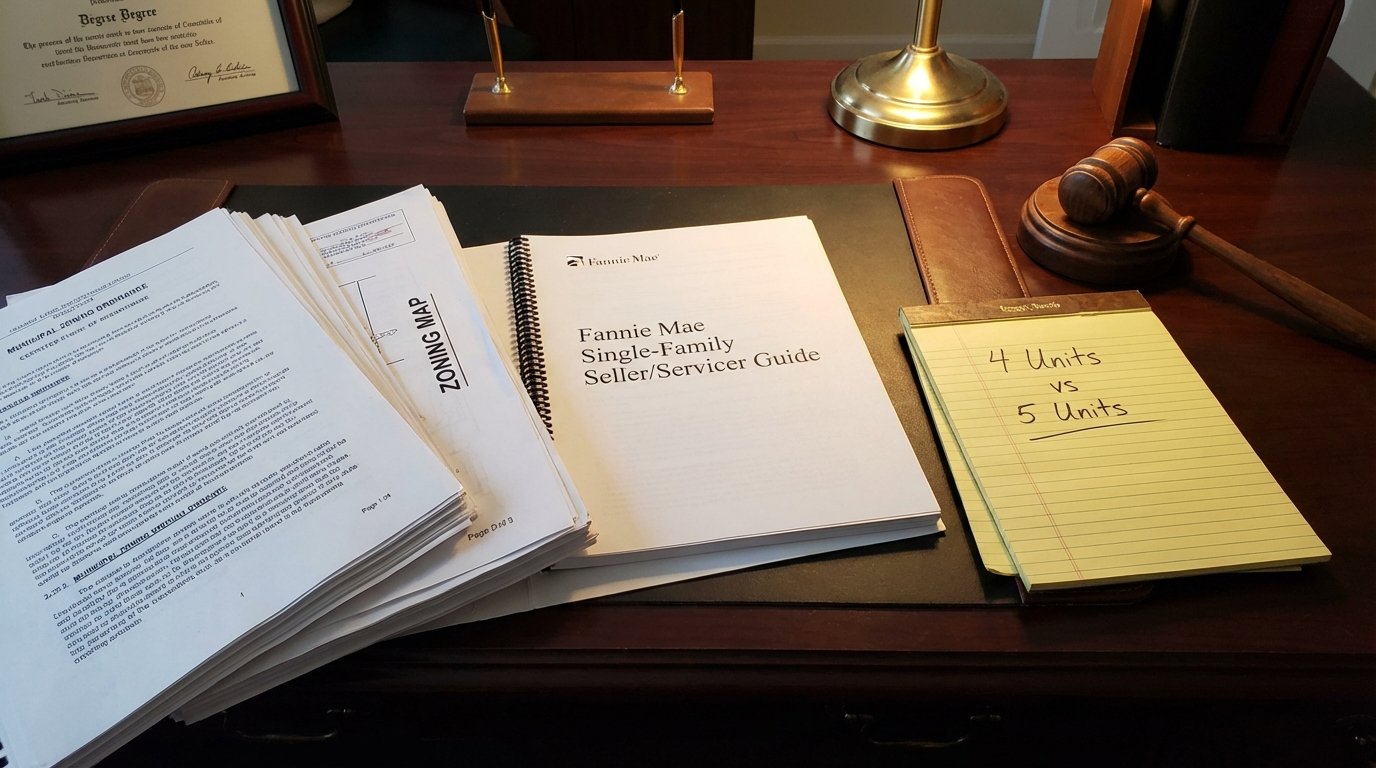
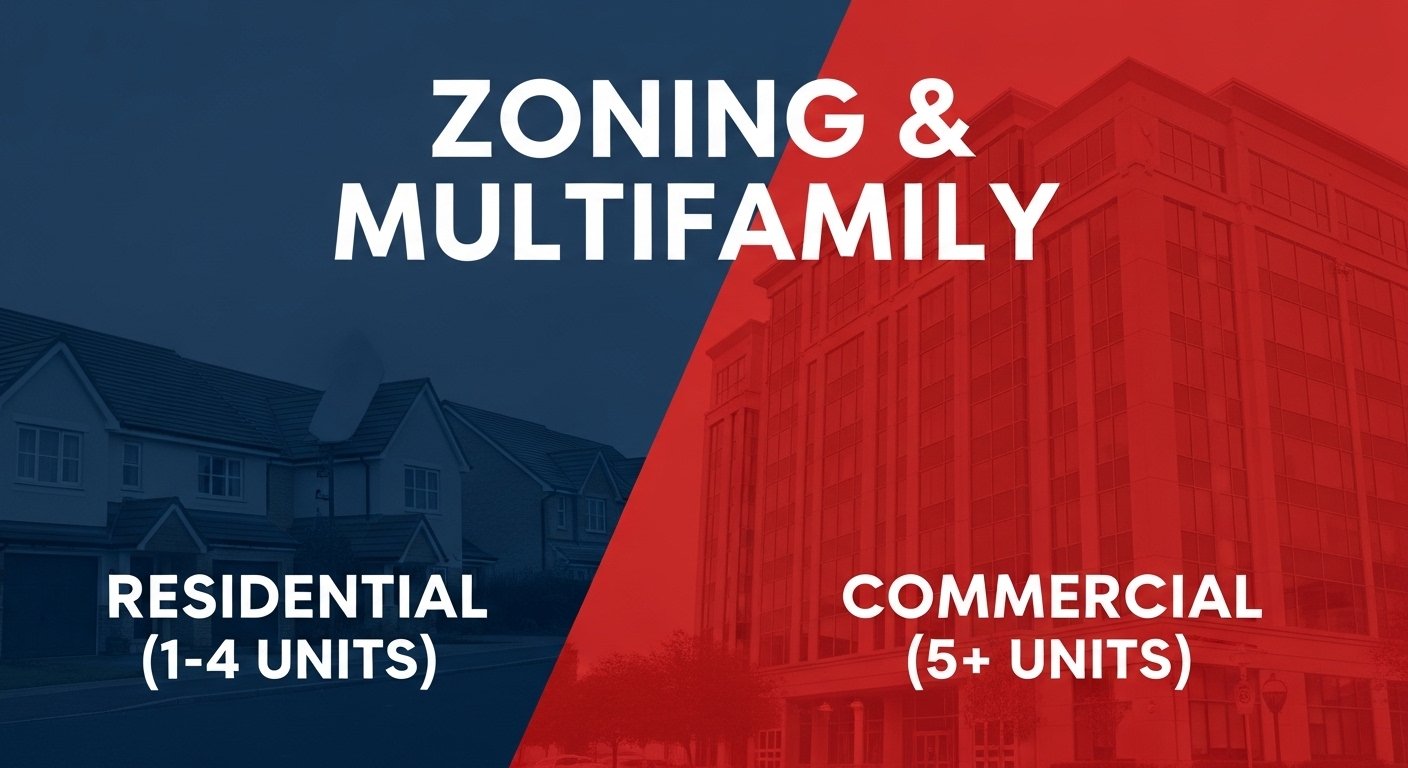
The most important line in real estate classification is drawn at four units. Any property with 1 to 4 residential units, a single-family home, a duplex, a triplex, or a fourplex, is treated as residential for financing and regulatory purposes. The moment a property hits 5 units, it crosses into commercial territory, regardless of how it looks or what neighborhood it is in.
This rule is set by Fannie Mae and Freddie Mac, the two government-backed agencies that buy most mortgages in the United States. Their guidelines determine what lenders will and will not finance using standard residential loan products.
Key Differences at a Glance
| Feature | Residential (1 to 4 Units) | Commercial (5+ Units) |
|---|---|---|
| Loan Type | Conventional / FHA mortgage | Commercial loan |
| Down Payment | 5 to 20% | 25 to 35% |
| Loan Term | Up to 30 years fixed | 5 to 25 years, often balloon |
| Approval Based On | Borrower credit and income | Property income (NOI) |
| Appraisal Method | Comparable sales | Income capitalization |
| Insurance | Homeowner or landlord policy | Commercial property policy |
| Building Codes | Residential codes (IRC) | Commercial codes (IBC) |
| Tax Treatment | Schedule E (most cases) | Business property rules |
Valuation Methods

How a property is valued is one of the biggest practical differences between the two categories. Residential properties are valued by comparing them to similar homes or units that have recently sold nearby. A duplex is priced based on what other duplexes in the area sold for.
Commercial properties are valued based on the income they produce. The income capitalization method divides the net operating income by the market cap rate to determine value. This means a commercial property’s value rises and falls with its rental income, not just what a neighbor sold for. If you want to understand exactly how that calculation works, read our full guide on cap rate and commercial property valuation.
The 1 to 4 Unit Rule: Where Residential Meets Commercial
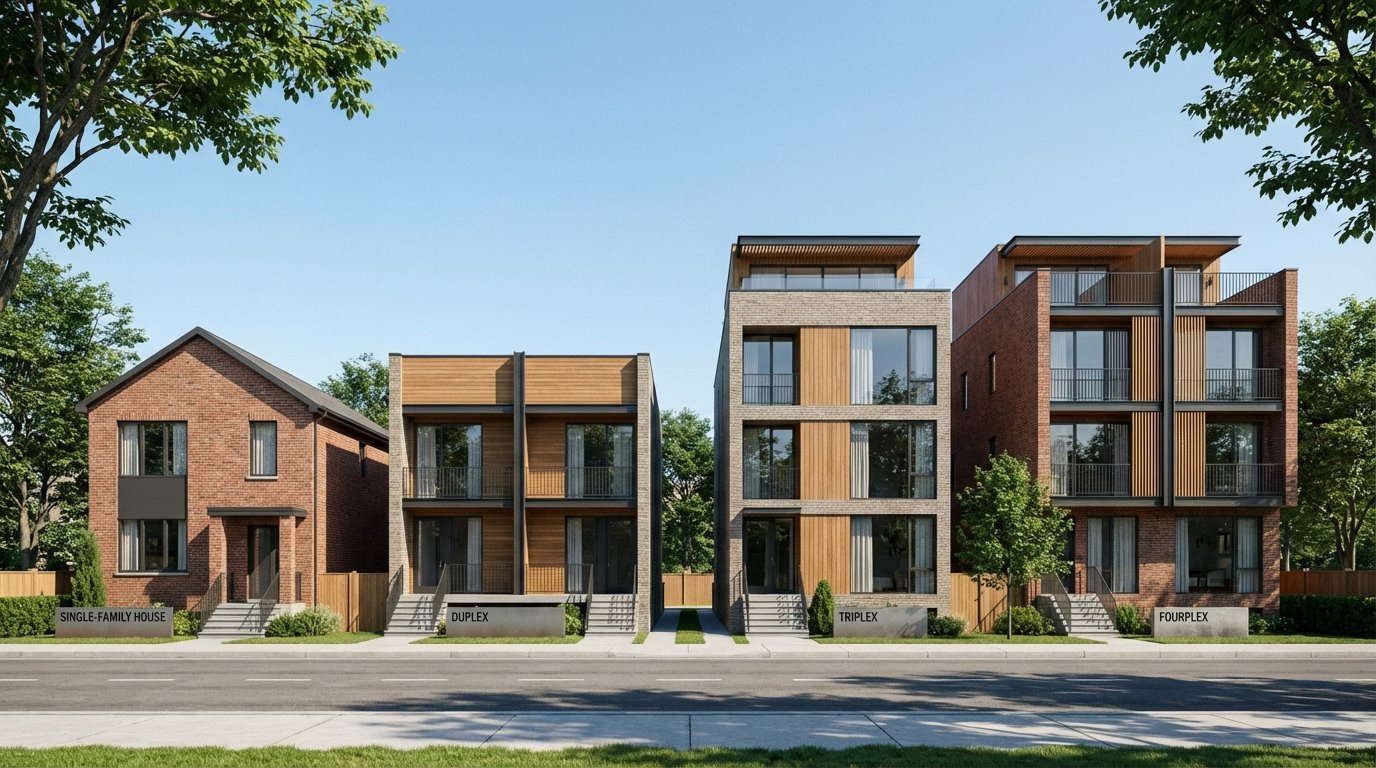
Five units is the magic number in real estate, and here is why it matters so much in practice.
If you buy a duplex (2 units), triplex (3 units), or fourplex (4 units), you can finance it with a standard residential mortgage. That means lower down payments, longer loan terms, fixed rates, and easier qualification. If you live in one of the units, you can even use an FHA loan with as little as 3.5% down on a fourplex.
The moment you buy a 5-unit building, all of that goes away. You now need a commercial loan. Commercial lenders care far more about the property’s income than your personal finances. They typically require 25% to 35% down, the loan term is shorter, and the interest rate may be higher or adjustable.
The difference between a 4-unit and a 5-unit building can mean $50,000 to $100,000 more in required down payment on a typical deal. That is why investors count units very carefully before making an offer.
Owner-Occupied Benefits
One of the most powerful strategies in real estate is buying a 2 to 4 unit building, living in one unit, and renting the others. This qualifies you for owner-occupied residential financing, which offers the best rates and lowest down payments available. FHA loans allow 3.5% down. Conventional loans can be as low as 5% down. This strategy is sometimes called house hacking and it lets new investors get started with far less capital.
If you are exploring this path in the New York area, you can see the neighborhoods and property types we work with across Nassau County, Suffolk County, Brooklyn, and Queens.
Can a Property Be Zoned Both Commercial and Residential?
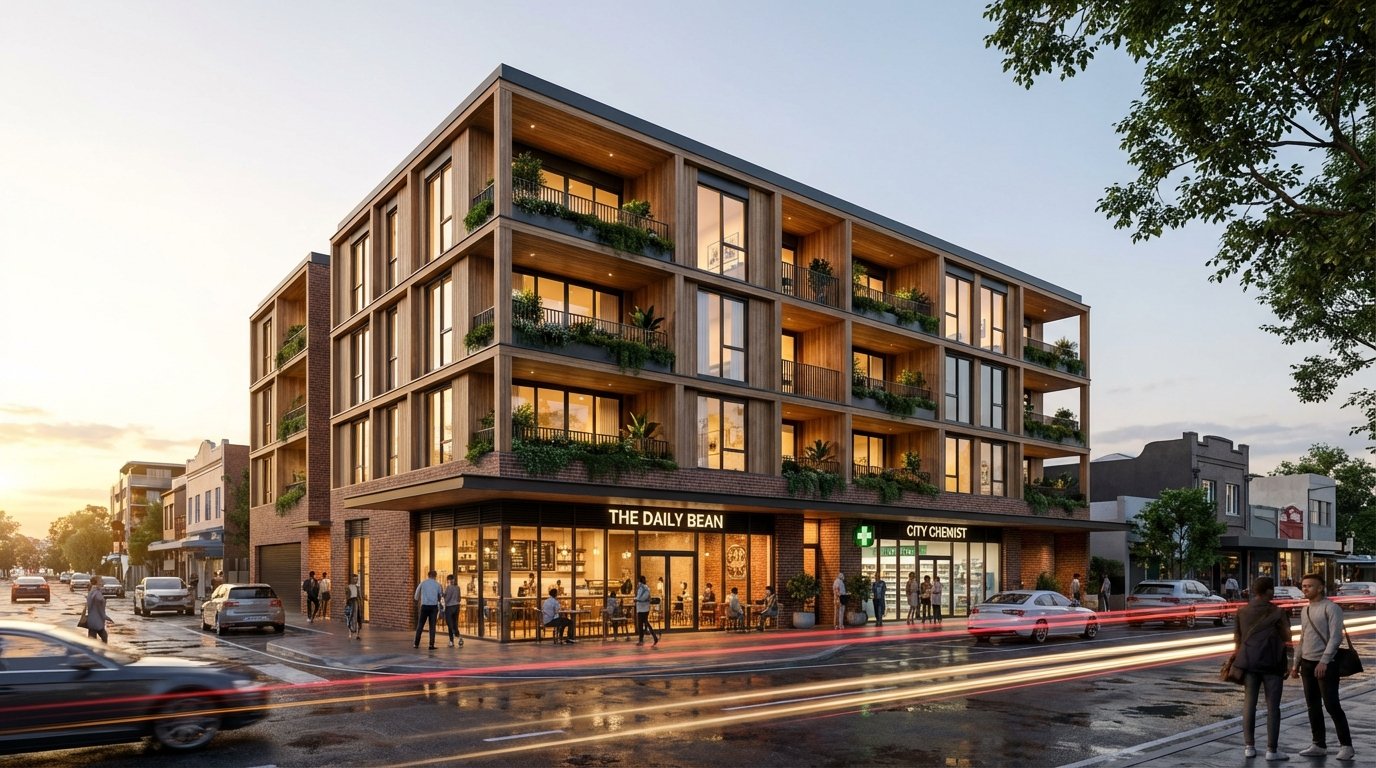
Yes, absolutely. Mixed-use zoning is a legal designation that allows a property to serve both commercial and residential purposes at the same time. It is extremely common in city neighborhoods, downtown areas, and walkable communities designed around transit and pedestrian activity.
What Mixed-Use Zoning Looks Like
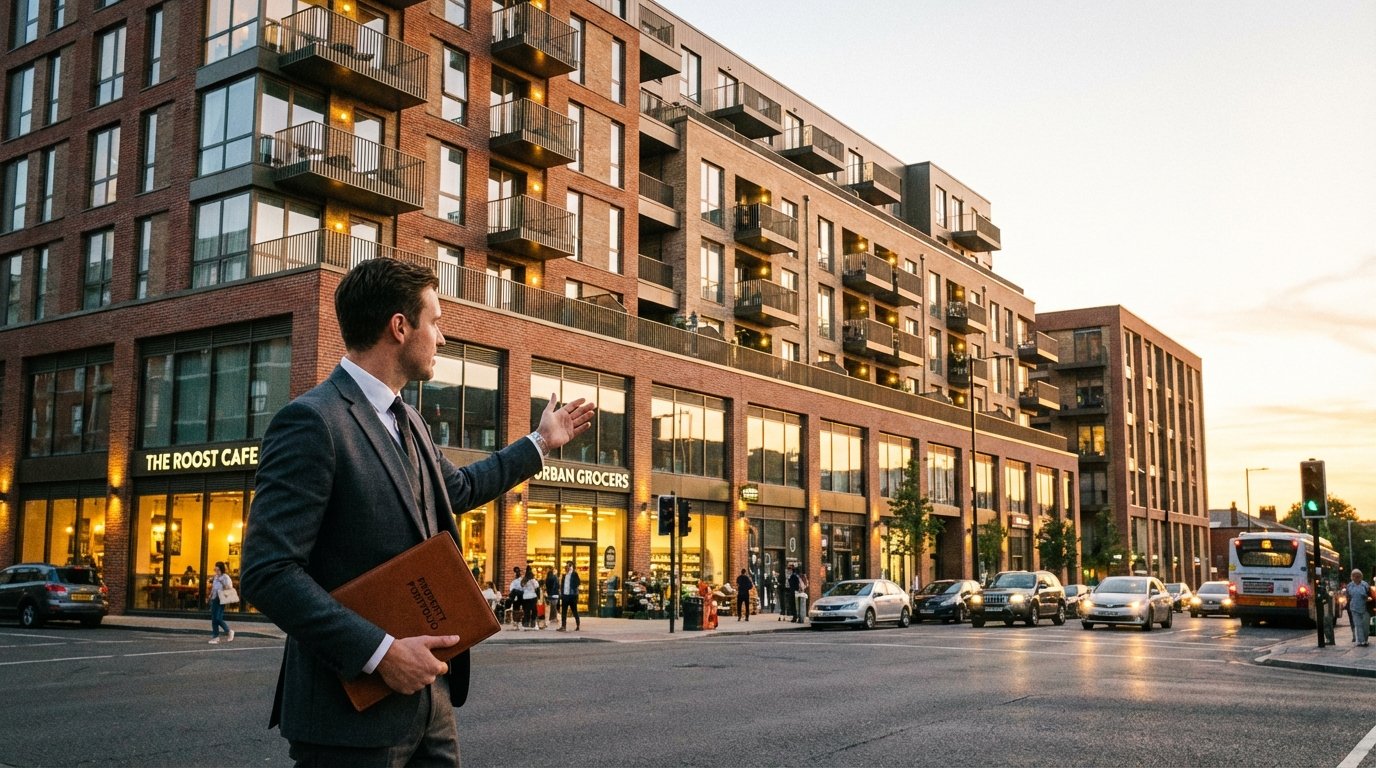
The most common example is a building with retail shops or restaurants on the ground floor and apartments or condos on the upper floors. The street level is zoned for commercial activity, while the upper levels are zoned for residential use. All of it sits on a single parcel under a single mixed-use designation.
Other examples include:
- Live-work lofts where artists or professionals have their studio or office in the same space they live
- Office buildings with luxury residential penthouses on the top floors
- Small strip commercial properties with an apartment behind or above the store
- Mixed-use developments in transit-oriented zones built around train or bus stations
Benefits of Mixed-Use Properties

From an investor standpoint, mixed-use properties offer real advantages. You have two income streams rather than one. If the retail space sits empty for a period, the residential rents continue coming in. Because these properties are often located in high-demand urban or suburban areas, they tend to hold their value well and attract strong tenant demand.
Mixed-use buildings also tend to have higher property values per square foot than single-use buildings in the same neighborhood, because they serve more needs and produce more income.
Challenges of Mixed-Use Properties
The complexity is higher. You are essentially managing two different types of tenants with very different needs, lease structures, and expectations. A commercial tenant negotiates a 3 to 10 year lease. A residential tenant rents month to month or on a one-year lease. The building must comply with both residential and commercial building codes. Insurance is more complex. And lenders approach these properties differently than pure residential or pure commercial assets.
Financing Mixed-Use Properties
Lenders classify mixed-use properties based on the dominant use. If more than 51% of the usable space or rental income comes from residential units, many lenders will treat it as a residential property for financing purposes. If the commercial component dominates, it needs a commercial loan.
SBA 504 loans are a popular financing option for owner-occupied mixed-use properties. They offer below-market fixed interest rates and longer terms for small business owners who plan to occupy the commercial portion. Down payments on mixed-use properties typically run from 25% to 30%.
Are Multifamily Properties Considered Commercial?
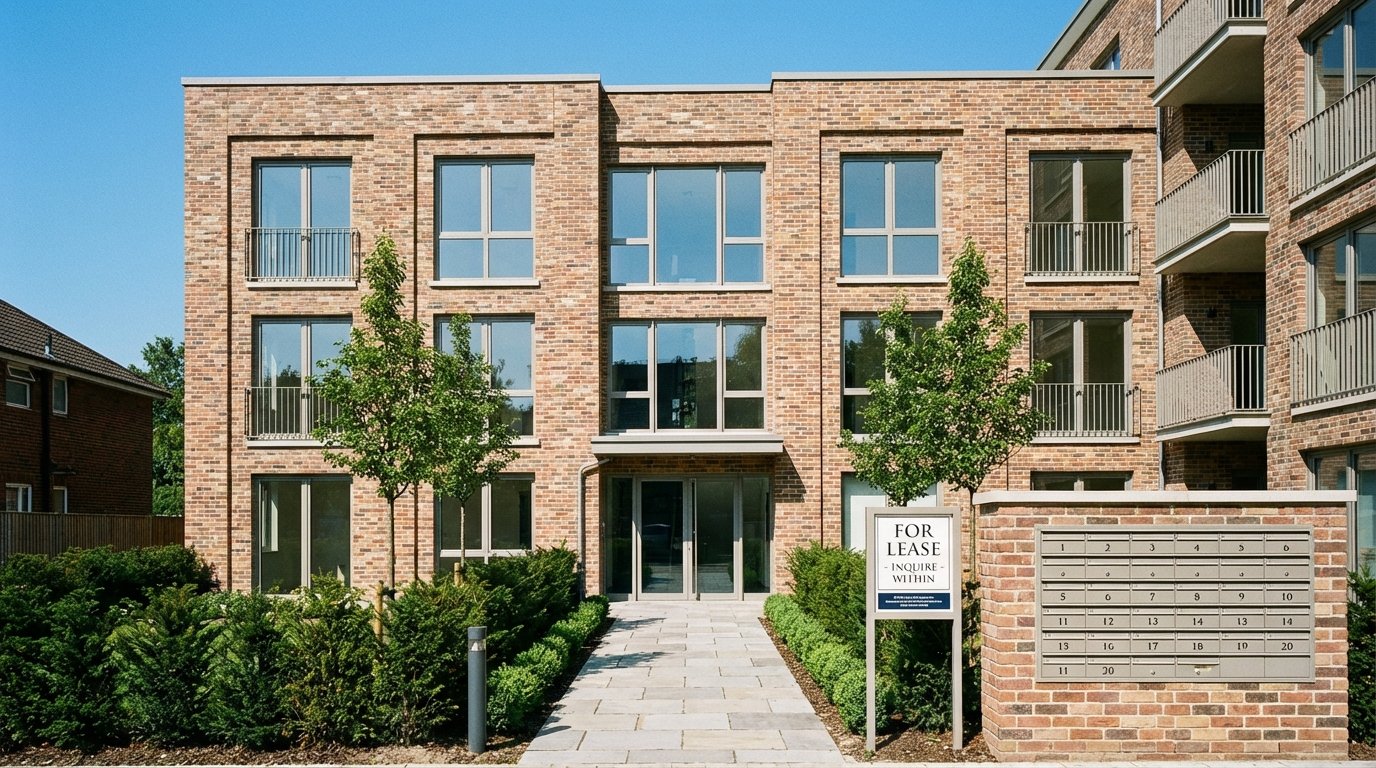
This is one of the most frequently asked questions in real estate, and the honest answer is: it depends on how many units the building has.
The Definitive Answer
A property with 1 to 4 units is residential for financing and regulatory purposes, even though it produces rental income. A property with 5 or more units is commercial, always, regardless of location or appearance.
Small Multifamily: 2 to 4 Units
Duplexes, triplexes, and fourplexes sit in an advantageous middle zone. They produce rental income like commercial properties, but they qualify for residential financing. This means:
- Residential mortgage rates and loan products
- Down payments as low as 15 to 25% (or 3.5 to 10% if owner-occupied)
- 30-year fixed rate loans available
- Easier qualification based on personal income and credit
This is why many first-time investors start with a fourplex. You get the income-generating scale of a small apartment building with the financing advantages of a home purchase. If you are looking at properties in specific communities, areas like Huntington, Brentwood, and Islip have active small multifamily markets worth exploring.
Large Multifamily: 5 or More Units
Once you cross into 5 units, the entire lending landscape changes. Commercial underwriting looks primarily at the property’s net operating income, vacancy history, and debt service coverage ratio. Your personal income matters less. Lenders want to see that the property itself can support the debt.
Commercial multifamily loans typically require:
- 25 to 35% down payment
- 5 to 20 year loan terms, often with a balloon payment
- Demonstrated history of occupancy and rental income
- Professional property management in place or planned
Why Does the 5-Unit Line Exist?
Fannie Mae and Freddie Mac set guidelines that define what qualifies for conventional residential financing. Their research showed that properties with 5 or more units behave more like businesses than homes. Management complexity increases sharply, the owner is rarely living on-site, and the investment is driven by income performance rather than personal use. So they drew the line at 5 units, and the entire industry followed.
Zoning Classifications Explained
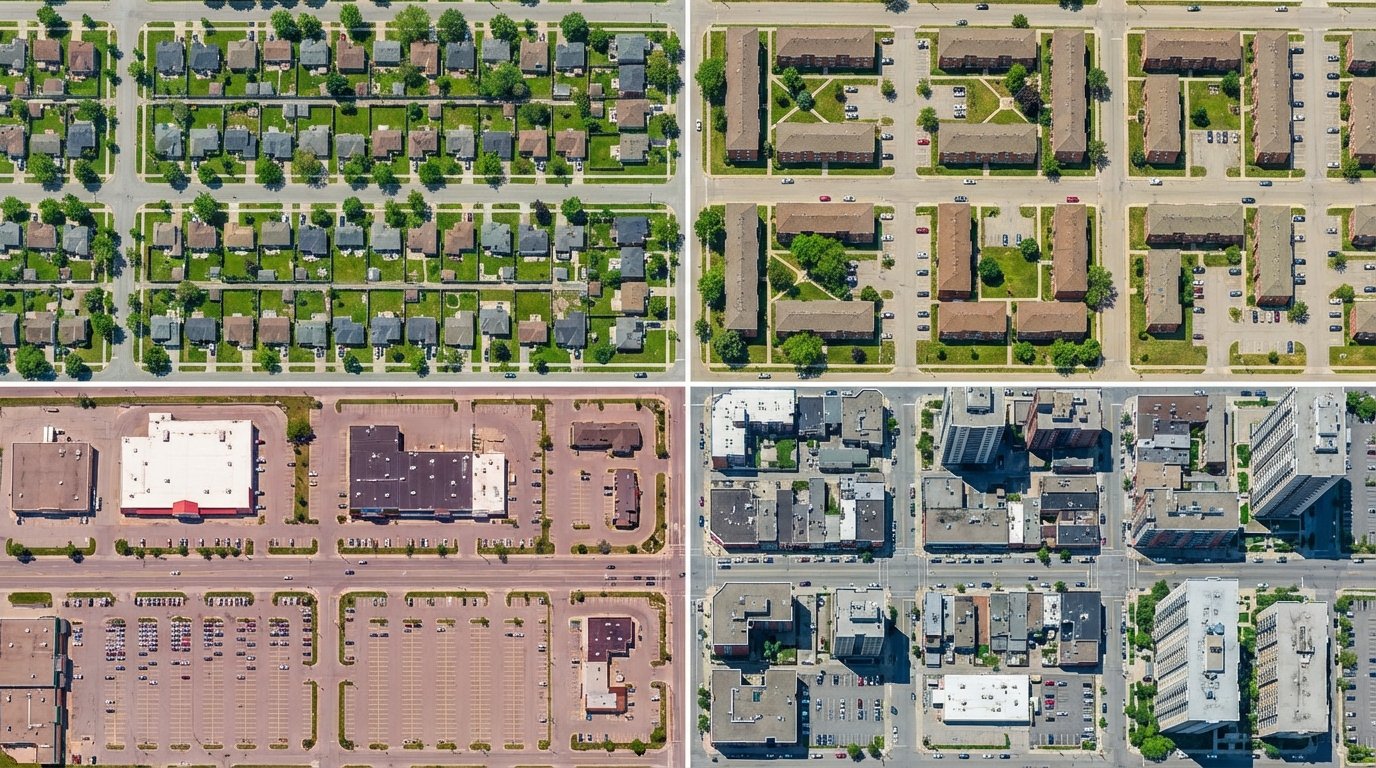
Every parcel of land in the United States falls under a zoning classification set by the local municipality. These designations control what can be built on the land, how it can be used, how tall buildings can be, and how much parking is required. Understanding zoning codes is essential before buying any property.
Residential Zoning Types
| Zone | What It Allows | Typical Density |
|---|---|---|
| R-1 | Single-family homes only | 1 unit per lot |
| R-2 | Single-family plus duplexes | 1 to 2 units per lot |
| R-3 | Small multifamily (3 to 8 units) | Low-density apartments |
| R-4 | Larger multifamily buildings | High-density apartments |
Commercial Zoning Types
| Zone | What It Allows | Examples |
|---|---|---|
| C-1 | Small neighborhood businesses | Corner stores, salons, small offices |
| C-2 | General community retail | Restaurants, banks, auto services |
| C-3 | Large-scale regional commercial | Shopping centers, big box stores |
Mixed-Use and Special Zones
- MU (Mixed-Use): Permits both commercial and residential in the same building or on the same block
- TOD (Transit-Oriented Development): High-density mixed-use zones built around train stations or bus hubs
- PUD (Planned Unit Development): Custom zoning for large projects, negotiated directly with the municipality
How to Find Your Property’s Zoning
Finding your property’s zoning is easier than most people think. Most municipalities post their zoning maps online through the city or county planning department website. You can search by address and see the exact designation. You can also call or visit the local zoning department directly, or check the property’s title report, which often includes zoning information.
Once you have the zone designation, look up the permitted uses list for that zone. This tells you exactly what activities are legally allowed on that parcel today, and what would require a special permit or rezoning.
Converting Property: Residential to Commercial and Back
The Rezoning Process
If you want to change how a property can be used, you need to apply for a rezoning through your local planning department. This is not a simple administrative step. Rezoning requires a formal application, often a public hearing where neighbors can voice support or objection, and approval from the planning commission or city council.
The process typically takes 3 to 12 months from application to final approval. Costs range from around $2,000 for small residential rezoning requests to $15,000 or more for complex commercial or mixed-use projects. There is no guarantee of approval, the municipality can deny the request if it conflicts with the master land use plan.
Conditional Use Permits
If full rezoning seems too difficult or expensive, a conditional use permit (CUP) may be an alternative. A CUP allows a specific use that is not normally permitted in that zone, subject to conditions set by the municipality. For example, a property in a residential zone might be granted a CUP to operate a small childcare center or a home-based professional office. The use is approved, but only under specific restrictions.
Adaptive Reuse Projects
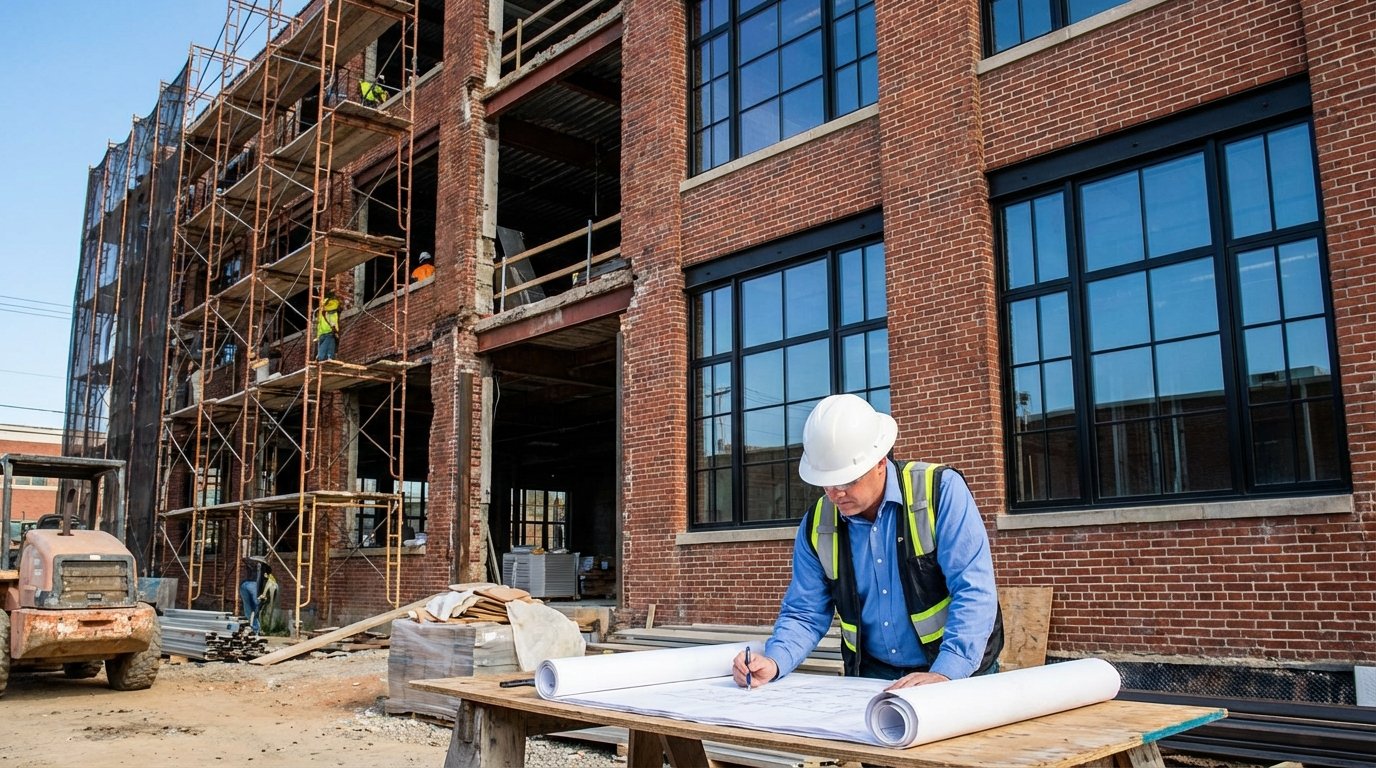
One of the most popular trends in real estate right now is adaptive reuse, converting buildings from one use type to another. Old warehouses and factories become loft apartments. Unused office buildings are converted to residential units. Former retail spaces become live-work studios.
These conversions typically require significant building code upgrades. A building that was built as a commercial structure needs to meet residential habitability standards, natural light, ventilation, egress windows, fire separation between units. Parking requirements change. ADA compliance must be addressed. Budget for these costs carefully before pursuing a conversion project.
Investment Implications: Which Property Type Should You Buy?
Residential Properties (1 to 4 Units): Pros and Cons
The main advantages of staying in the residential category are access to better financing and simpler management. You can use conventional or FHA loans, get 30-year fixed rates, put less money down, and qualify based on your personal financial picture. A fourplex is genuinely not much harder to manage than owning one rental home.
The limitation is scale. A fourplex produces four units of rent. If you want to grow a meaningful portfolio, you will eventually need to move into larger commercial properties.
For investors dealing with a residential property that needs to be sold quickly, whether due to condition, inherited ownership, or financial pressure, it helps to understand your options. You can read more about selling a house as-is, selling an inherited property, or selling a house in foreclosure.
Commercial Properties (5 or More Units): Pros and Cons
Larger commercial multifamily properties offer stronger cash flow potential, longer commercial tenant leases in mixed-use scenarios, and the ability to scale quickly. Professional management is easier to justify financially on a 20-unit building than on a fourplex.
The barrier to entry is real though. You need significantly more capital for the down payment. Loan terms are less favorable. And the complexity of operations, reporting, and compliance increases sharply.
How to Decide
The right choice depends on three things: how much capital you have available, how much management complexity you can handle, and what your long-term goals look like. Most successful investors start with residential-eligible small multifamily, build equity and experience, and eventually move into larger commercial assets. There is no reason to rush past the fourplex stage if the financing advantages are working in your favor.
If you are weighing whether to sell or hold a property, it can also help to understand the true cost of each path. This guide on how much you lose selling a house as-is breaks down the real numbers. And if you are trying to move a property quickly in a difficult market, see how to sell a house fast in a slow market for practical strategies.
Frequently Asked Questions
How many units is considered commercial property?
Five or more units. Any building with 1 to 4 residential units is classified as residential for financing and regulatory purposes. At 5 units, the property crosses into commercial classification and requires a commercial loan.
Can I get a residential mortgage for a 5-unit building?
No. Fannie Mae and Freddie Mac guidelines limit residential financing to properties with 4 or fewer units. A 5-unit building requires a commercial loan, which means a larger down payment, shorter loan term, and income-based underwriting.
What is the difference between commercial and residential zoning?
Residential zoning allows homes, apartments, and similar housing uses. Commercial zoning allows businesses, retail, offices, and services. The specific uses permitted within each zone are detailed in the local zoning ordinance. Some zones allow both, which is called mixed-use zoning.
Can a duplex be commercial property?
Rarely. A duplex is a 2-unit residential property and is almost always zoned and financed as residential. It could be located in a commercially-zoned area, which would be unusual, but for financing purposes it is always treated as residential because it has fewer than 5 units.
Are apartments commercial or residential?
It depends on the size. Apartment buildings with 1 to 4 units are residential. Buildings with 5 or more units are commercial. A large apartment complex with 50, 100, or 200 units is definitively a commercial asset.
Can you have a business in a residential zone?
Sometimes. Many municipalities allow limited home-based businesses in residential zones as a permitted or conditional use. Operating a store, office, or service business out of a residential property typically requires a home occupation permit and must meet restrictions on signage, traffic, employees, and storage.
What is mixed-use zoning?
Mixed-use zoning allows a property to serve both commercial and residential functions. The most common example is a building with retail or restaurant space on the ground floor and apartments above. Mixed-use zones are common in walkable urban areas and around transit hubs.
How do I find out my property’s zoning?
Search the county or city planning department website using the property address. Most municipalities have online zoning maps. You can also call the zoning office directly or check the property’s title report.
Can I change my property’s zoning?
Yes, but it is not easy or fast. You must apply for rezoning through the local planning department, attend a public hearing, and receive approval from the planning commission or city council. The process takes 3 to 12 months and costs $2,000 to $15,000 or more. Approval is never guaranteed.
Is a triplex residential or commercial?
Residential. A triplex has 3 units, which is below the 5-unit commercial threshold. It qualifies for residential financing, including conventional and FHA loans.
What does R-1, R-2, C-1 zoning mean?
These are zoning designation codes. R-1 typically means single-family residential only. R-2 allows duplexes or two-family homes. C-1 usually means light neighborhood commercial uses like small shops and offices. The exact definitions vary by municipality, so always check your local zoning code.
Can commercial property be converted to residential?
Yes. Adaptive reuse conversions of offices, warehouses, and factories into residential units are increasingly common. These projects require rezoning approval or a conditional use permit, and significant building code upgrades to meet residential habitability standards.
What is a variance in zoning?
A variance is an official exception to a specific zoning rule granted by the local zoning board. If your property does not technically meet the setback requirement or parking ratio for a project you want to build, you can apply for a variance. It is narrower than rezoning, it does not change the zone, it just allows a specific deviation from the rules.
How is mixed-use property financed?
Lenders evaluate the dominant use. If more than 51% of the rentable space or income is residential, many lenders treat it as a residential commercial property. If commercial use dominates, a commercial loan is required. SBA 504 loans work well for owner-occupied mixed-use properties. Down payments typically run 25% to 30%.
Are condos commercial or residential?
Condominiums are residential property. Individual condo units are bought and sold with residential financing. The condo association owns and manages the common areas and building systems. Some condo buildings include commercial units on the lower floors, but individual residential units are always classified as residential.
Is a fourplex a commercial loan?
No. A fourplex qualifies for residential financing because it has 4 units, which is below the 5-unit commercial threshold. You can use a conventional mortgage, an FHA loan, or even a VA loan for a fourplex, depending on your situation.
How long does rezoning take?
Typically 3 to 12 months from application to final approval. Simpler requests in cooperative municipalities move faster. Large or controversial rezoning applications can take well over a year, especially if significant community opposition arises or environmental review is required.
Conclusion
The line between commercial and residential property is clearer than most people realize. Four units or fewer means residential financing, simpler rules, and an easier path in. Five units or more means commercial classification, larger down payments, and income-based lending.
Mixed-use zoning gives investors the ability to hold both uses in a single property, with diversified income and strong location premiums. And zoning itself can be changed through the proper process, though it takes time, money, and patience.
Before you make any purchase, confirm the zoning designation, count the units carefully, and understand what financing category the property falls into. These three steps will save you from costly surprises.
Ready to analyze your next property? Run the numbers on both the residential and commercial financing options before you commit. And if you are currently holding a property you need to exit, whether it is an inherited home, a property going through divorce, or a building you simply need to sell fast, explore your options with We Buy Property NY. You can also learn how our process works or contact us directly to get started.