
Key Takeaways
- New York is not one marke t. NYC, Long Island, Westchester, and upstate move at different speeds, so start with local data, not headlines.
- Price is your strongest marketing tool. The right number creates urgency, while the wrong number creates silence.
- In New York, legal details can slow you down faster than a bad photo, so line up disclosures, title, and attorney support early.
- Buyers in 2026 are payment sensitive, so incentives and low friction terms can beat a big price cut.
- Staging and strong media are not optional in competitive pockets, especially anywhere commuter demand is strong.
- Always keep a Plan B, like a cash buyer or an iBuyer style offer, so you stay in control if timing matters most.
Introduction
New York real estate can feel intense even when the market slows down. The stakes are high, the costs are high, and the rules can feel like a second job. In early 2026, New York’s housing market started the year with tighter inventory and cautious buyers in many areas, which means sellers need a smarter plan than “list and hope.”
The good news is that homes still sell quickly here when you lean into New York specific strategy: local pricing, clean paperwork, better presentation, and wider marketing. Keep reading and you will have a simple, step by step plan to sell faster in New York without getting trapped in delays.

Understanding New York’s Real Estate Market
If you want to sell fast, you need to know what “fast” means where you live. Start with real days on market and then plan your pricing, prep, and marketing around that reality.
Statewide, the median days on market for New York in January 2026 was 86, which shows how slow the overall pace can feel when you zoom out. But New York is a patchwork, and some areas move much faster than the state median suggests.
Here is a practical snapshot using January 2026 local market data to show how different the pace can be:
- New York City: homes averaged about 66 days on market
- Nassau County: about 39 days
- Suffolk County: about 37 days
- Westchester County: about 37 days
- Albany: about 32 days
What should you take from that? Two things. First, your strategy must match your region. Second, you can beat your area’s average if you become the best value and the easiest home to buy in your price range.
Seasonal trends matter more in New York than many sellers expect. Spring usually brings the most buyers, but it also brings the most competition. Winter can still work well if your home shows beautifully and your pricing is sharp, because serious buyers do not stop looking, they just become pickier.
Buyer demographics also shape your speed. In NYC, cash is a bigger part of the market than most people realize. On Long Island, Westchester, and the Hudson Valley, commuter buyers and school district focused buyers often drive demand, and their schedules and lender timelines shape your closing window.
One more 2026 reality you should plan for is rate sensitivity. Even with rates dipping below 6 percent in late February 2026, buyers still make decisions based on monthly payment comfort and job confidence. That is why speed often comes from smart incentives and clean presentation, not just price cuts. If you want a deeper look at how a slow or cautious market changes your approach, read our guide on how to sell your house quickly in a slow market.
Pricing Your NY Home Competitively
Pricing in New York is not about ego. It is about the buyer pool you want to attract. The fastest sales happen when your price feels like the best option in a short list of similar homes.
New York specific pricing starts with location and property type. A single family home in Nassau County is priced and negotiated differently than a Queens townhouse, and both are different from an upstate home with acreage. Your job is to pick the right comp set, meaning homes that match your condition, layout, and micro location.
Property taxes matter more here than in many states because buyers do not just compare purchase price, they compare total monthly cost. Taxes and insurance sit inside a buyer’s monthly budget and can change what they qualify for. In New York, that effect can be stronger in high tax towns, so pricing must reflect what buyers can comfortably carry.
Another NY pricing factor that surprises sellers is transfer taxes, especially in NYC. Even if buyers pay some closing costs, sellers often carry meaningful closing expenses in the city, and those numbers influence your net and your negotiation flexibility. New York State imposes a real estate transfer tax when consideration exceeds $500. In New York City, the city transfer tax rate depends on whether the price is at or below $500,000 or above it. That threshold can shape buyer behavior and search brackets, which is why pricing just under key cutoffs can expand your buyer pool.
Here is how to price for speed without undercutting yourself:
- Start with sold comps from the last 60 to 90 days, not the highest list prices you see online
- Compare your home to active listings that buyers will tour the same week as yours
- Adjust honestly for condition, layout, parking, yard, and taxes
- Pick a price that makes your home feel like the best value, not the last resort
If you are in NYC, pricing is also psychological. Buyers look at maintenance, common charges, and building rules as part of the “real price.” In suburbs, school districts and commute time act like pricing forces, even when the house itself is similar.
The simplest truth is this: in 2026, you can ask for a premium only if your home looks and feels premium the moment buyers arrive. If you want to sell fast, the price has to match the buyer’s reality, not the seller’s memory. Sellers who want to skip all of this sometimes find that selling for cash is the right choice when pricing uncertainty and carrying costs are both working against them.
NY Legal Requirements and Paperwork
In New York, paperwork is not just paperwork. It is the difference between closing on time and watching a deal stall.
Start with disclosures. New York’s Property Condition Disclosure Statement has changed in recent years, including stronger requirements and added questions related to flood risk. If you delay this, you can create unnecessary buyer anxiety and attorney back and forth. Fill it out carefully, based on your actual knowledge, and be consistent with what you say verbally during showings.
Lead paint disclosure is another common issue, especially for older homes. Federal rules require disclosures and specific language for most housing built before 1978, and buyers must be given the proper information and warnings in the contract process. If your home is older, do not wait until the last minute to gather whatever documentation you have.
Certificates of Occupancy and permits can become a real speed bump. In New York City, the Department of Buildings explains that a Certificate of Occupancy states the legal use and occupancy, and changes in use or occupancy can require a current or amended certificate. Outside NYC, towns often have their own requirements for certificates related to alterations, new construction, or changes tied to building permits. If you had work done, like finishing a basement, converting a garage, adding a deck, or changing layouts, your buyer’s attorney may ask for proof it was permitted and signed off.
Now the big New York difference: attorneys. In most parts of New York, buyers and sellers use attorneys, and brokers are not permitted to draft legal documents. This means if you want speed, you should hire your real estate attorney early, not after you accept an offer. Your attorney can help you spot contract issues, prepare documents, and reduce surprises.
Title issues are another place where New York deals slow down. Common problems include old liens, judgments, errors in past recordings, boundary questions, and open permits. The fastest closings happen when sellers clear issues early with a title company and attorney, instead of reacting under pressure.
If you want one simple rule, it is this: in New York, the cleanest paperwork often sells the home just as much as the kitchen does.
Fast Sale Strategies for NY Sellers
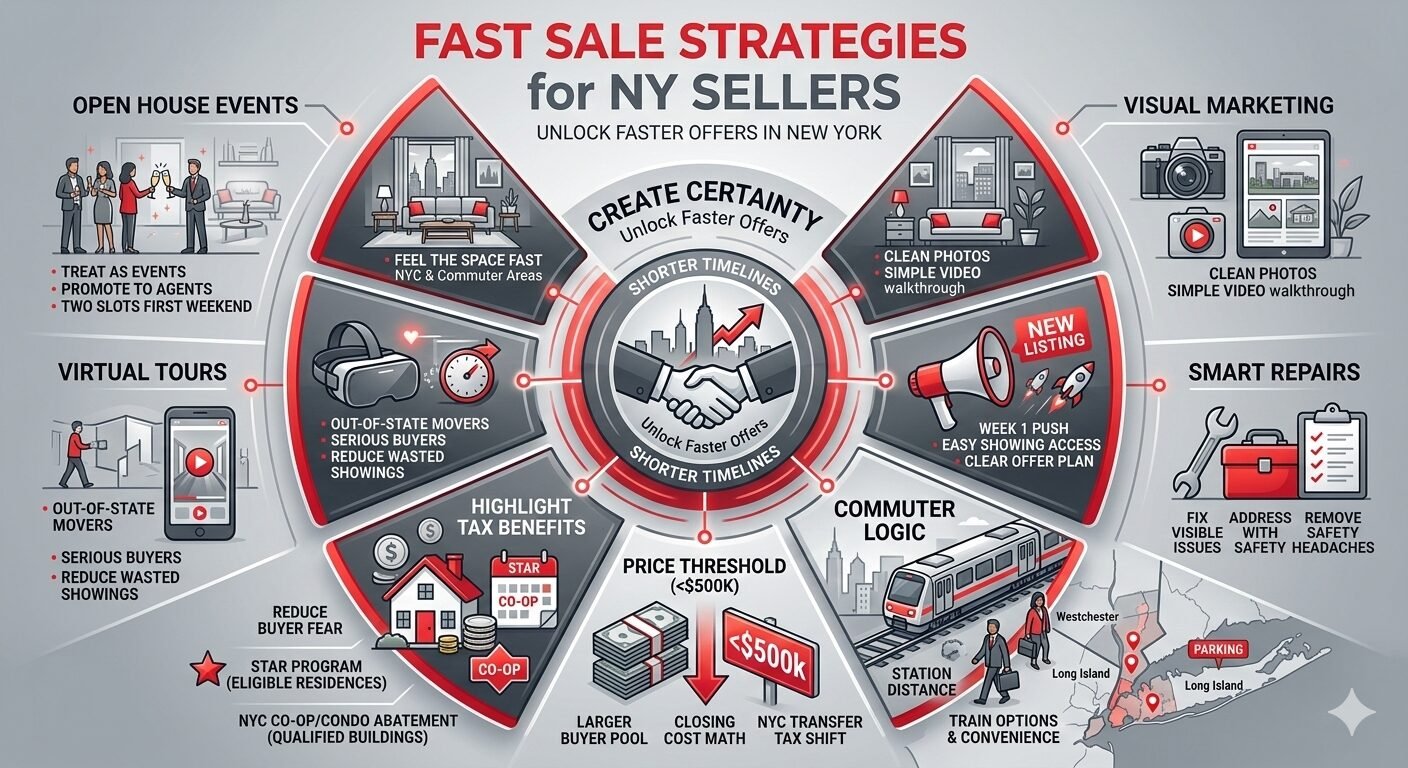
New York buyers move quickly when they feel certainty. They offer faster when the home looks ready, the numbers make sense, and the process feels safe.
Here are the strategies that consistently shorten the timeline in New York:
- Professional staging, especially in NYC and high demand commuter areas, so buyers feel the space immediately
- Clean, bright photos and a simple video walkthrough so buyers can decide to tour fast
- A strong first week launch with easy showing access and a clear offer plan
- Clear repair choices: fix what is visible, address safety issues, and remove anything that looks like a future headache
Now lean into commuter logic. In Westchester, Long Island, and parts of the Hudson Valley, many buyers choose with a commute in mind. That means you should highlight what matters to that buyer: station distance, parking situation, express train options, and lifestyle convenience. Use plain language in your listing remarks and your open house materials.
If your home can be priced under $500,000, it can open a larger buyer pool in many markets because that threshold can change searches and closing cost math, especially in NYC where transfer tax rates shift at that level.
You can also highlight legitimate tax benefits and exemptions that reduce buyer fear. The STAR program offers school tax relief for eligible primary residences. In NYC, many co op and condo owners benefit from the Cooperative and Condominium Property Tax Abatement when the building qualifies.
Virtual tours matter more in New York than sellers expect because the buyer pool includes out of state movers, busy professionals, and families comparing multiple areas. A good walkthrough video reduces wasted showings and attracts serious buyers.
Open houses in New York can work extremely well when you treat them like events, not chores. Promote them to local agents, post them clearly online, and make sure the home feels calm and clean. If you are serious about speed, consider two open houses the first weekend: one daytime, one later in the day, to catch different schedules. For a broader list of tactics that apply specifically to Long Island sellers, see 5 proven ways to make your house sell faster on Long Island.
Selling in Different NY Markets
New York is a collection of mini markets with different rules, buyer behavior, and deal timelines. The best sellers adjust their approach based on where the home sits and what type of buyer dominates that pocket.
New York City
NYC is all about property type and building rules. A condo deal can move differently than a co-op deal because co-op boards often require a full board package and an approval process. That reality can stretch timelines even when pricing is right. Also, transfer taxes matter, and NYC has different rates depending on whether consideration is at or below $500,000 or above it. If you want speed in NYC, make your building documents easy to access, respond quickly to buyer questions, and keep your attorney engaged from day one.
Long Island
Long Island buyers care deeply about school districts, taxes, flood history, and permit status. If you want a fast sale, you must be ready for attorney and title questions about past work, CO related issues, and disclosures. On the pacing side, Nassau and Suffolk can move faster than the statewide median, with January 2026 averages around 39 days in Nassau and 37 days in Suffolk. That means buyers are active, but they still expect strong conditions and clean paperwork. Learn more about your options on our Nassau County and Suffolk County pages.
Upstate New York
Upstate buyers often prioritize space, privacy, and value. They also pay attention to systems like septic, wells, roofs, and heating, because those costs can be bigger in rural areas. Pricing must be sharp, and marketing should highlight lifestyle benefits clearly. In places like Albany, January 2026 homes averaged about 32 days on market, which can be surprisingly quick when the home is priced right.
Westchester and Hudson Valley
This region is commuter driven and lifestyle driven. Buyers want a home that supports both work and family life, and they often compare towns very closely. Westchester’s January 2026 pace was around 37 days on average, so well prepared homes can move quickly. If you can emphasize Metro North access, walkability, and school value, you can attract decisive buyers.
Working with NY Real Estate Professionals
In New York, the right professionals do more than “help.” They protect your timeline. Choose an agent with local expertise, meaning they can explain your micro market, price bands, and buyer behavior. Ask how they market beyond the listing feed. Ask what they do in the first seven days, and what they do when a listing goes quiet.
The real estate attorney is especially important in New York because attorneys are commonly used for contracts and closings, and brokers cannot simply draft legal documents the way many sellers assume. If speed matters, hire your attorney early, and make sure they are responsive.
Some sellers also consider flat fee MLS options. This can reduce upfront costs, but you must be honest about what you are taking on. If you choose a flat fee approach, you still need great photos, strong showing management, clear negotiation skills, and an attorney to handle contract details properly. Many sellers find it helpful to compare the full picture by reading this Long Island agent vs cash buyer guide before committing to one path.
Commission in New York is negotiable, and after industry changes in recent years, more buyers are signing agreements that clarify agent compensation. Some sellers also explore whether they can save on commission by selling without a realtor to keep more of their net. Your exact number depends on location, property type, and service level.
Alternative Fast Sale Options in New York
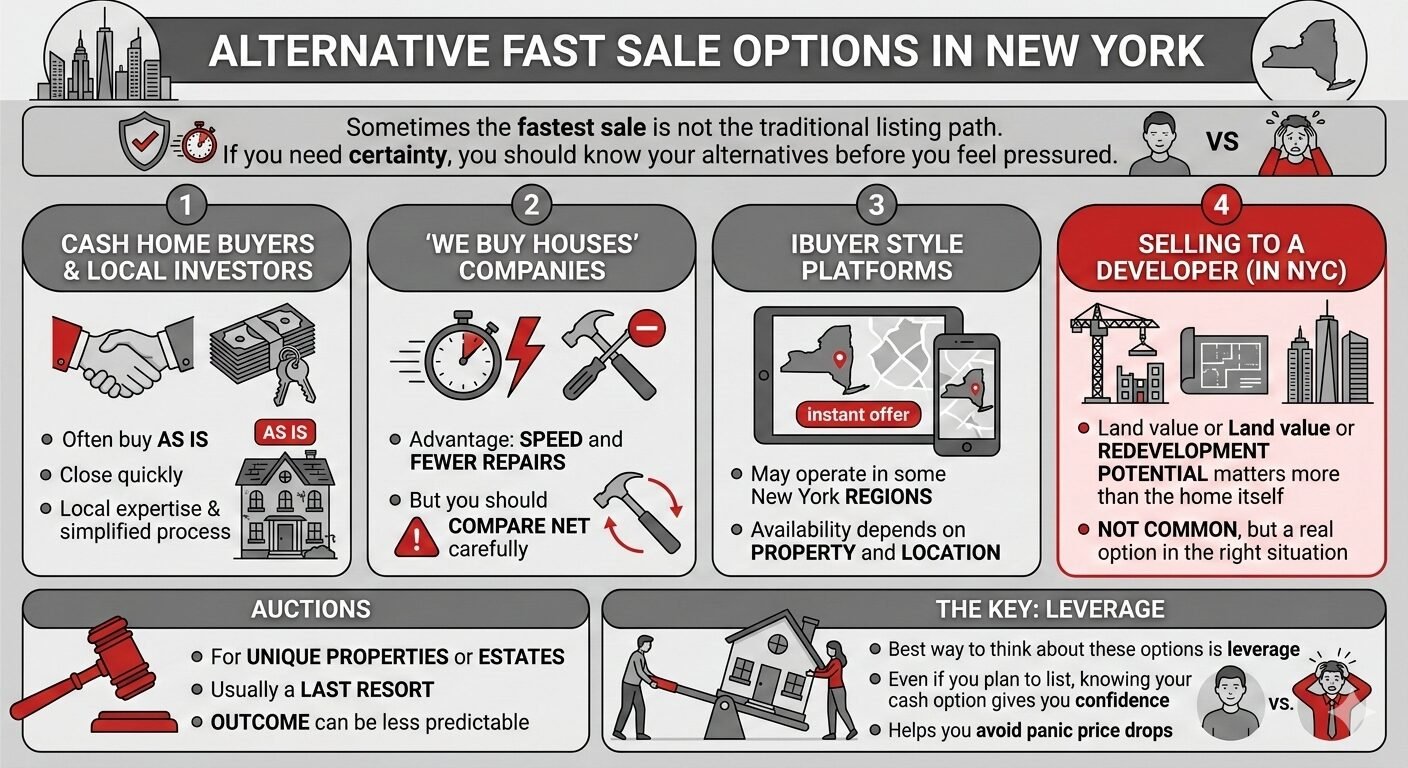
Sometimes the fastest sale is not the traditional listing path. If you need certainty, you should know your alternatives before you feel pressured.
Here are the main fast sale options New York sellers use:
- Cash home buyers and local investors who can often buy as is and close quickly
- We Buy Houses companies, where the main advantage is speed and fewer repairs, but you should compare net carefully
- iBuyer style platforms, which may operate in some New York regions, and availability depends on property and location
In NYC, selling to a developer can be relevant for certain properties, especially when land value or redevelopment potential matters more than the home itself. This is not common for every seller, but it can be a real option in the right situation.
Auctions can work for unique properties or estates, but they are usually a last resort because the outcome can be less predictable. The best way to think about these options is leverage. Even if you plan to list, knowing your cash option gives you confidence and helps you avoid panic price drops. You can also sell your house as-is and skip repairs and staging entirely if timeline is your top priority. If you inherited the property and are unsure of your options, visit our page on selling an inherited property for guidance specific to that situation.
NY Specific Tips to Speed Up Your Sale
If you want fewer delays and fewer deals falling apart, focus on buyer quality and transaction readiness.
These tips are simple, but they are exactly what keeps New York deals moving:
- Require proof of funds or strong lender pre approval before you accept an offer, especially in competitive areas
- Offer closing cost assistance when it increases the buyer pool more than a small price reduction would
- Be flexible on closing date when you can, because timing is often the hidden reason deals fail
- Pre clear title issues early by ordering title work and resolving liens or paperwork problems before you go under contract
- Keep your documents ready: permits you have, receipts for major work, utility averages, surveys if available, and any building documents if you are in a condo or co op
- Respond fast during attorney review and inspection windows, because slow responses create buyer doubt
Also, do not underestimate showing access. In New York, buyers often tour quickly and decide quickly. If your home is hard to see, you lose momentum.
Finally, remember that speed is created in the first week. If your listing launches strong, it often sells strong. If it launches weak, you spend weeks trying to fix the first impression. If you are going through a divorce and need to sell quickly under time pressure, read our guide on how to sell a house during divorce for the specific steps that apply in New York.
Conclusion
Selling fast in New York in 2026 is about matching the reality of your local market and removing friction. That means pricing well, presenting the home like a product, staying flexible with access and terms, and handling New York paperwork early so attorneys are not forced into delays. In a state where the median days on market can look slow when you zoom out, local strategy is what separates the quick sale from the stale listing.
You also have more than one path. You can list traditionally, go flat fee, consider an iBuyer style offer in certain regions, or choose a cash buyer when certainty matters most. If you want a fast, local valuation and a simple option to sell without repairs or showings, connect with NY cash buyers and request a local valuation with WeBuyPropertyNY.